
This is the age of options whether it’s a travel destination, transportation, or accommodations. Guests are more open to discovering new experiences and eager to try something different. Short Term Rentals (STR), homestays, traveling to off-beat locations, and minimalist stays have created a strong demand for alternative accommodations. Traditional hotel rooms still matter, but STRs are becoming a preferred choice for many.
Short-term rentals are still relatively new, and finding software built specifically for them can be challenging. Many property managers rely on legacy hotel systems that don’t fully meet their needs. This article highlights the differences between hotel and STR operations and explores the key features specialized STR management software should offer.
Hotel stays provide standardized services and consistent amenities, while short-term rentals are often the homes of owners, offering guests independence, privacy, and a more personal, home-like experience.
Hotels vs STRs: What Guests Really Want
Lavish hotels with well-coordinated room service continue to attract travelers who value predictability, structure, and the comfort of knowing every detail is taken care of. At the same time, more travelers are choosing privately owned homestays, villas, or off-beat properties that offer a different kind of freedom. STR guests often embrace independence, enjoying self-catering, managing their own schedules, and experiencing local life in ways standardized hotels cannot provide. Privacy, flexibility, and authentic cultural experiences are key motivators. Remote work, extended stays, and business-plus-leisure travel have further fueled this trend.
The global short-term rental platform market is estimated at USD 9.1 billion in 2025 and is projected to reach USD 52.0 billion by 2035. Hotels, meanwhile, remain essential for business travelers, families, and those seeking amenities, loyalty perks, or central locations.
While the gap is narrowing as both models borrow from each other, their operational foundations remain fundamentally distinct. The sections below explore these differences in detail.
Differences Between Hotel Operations and STR Operations
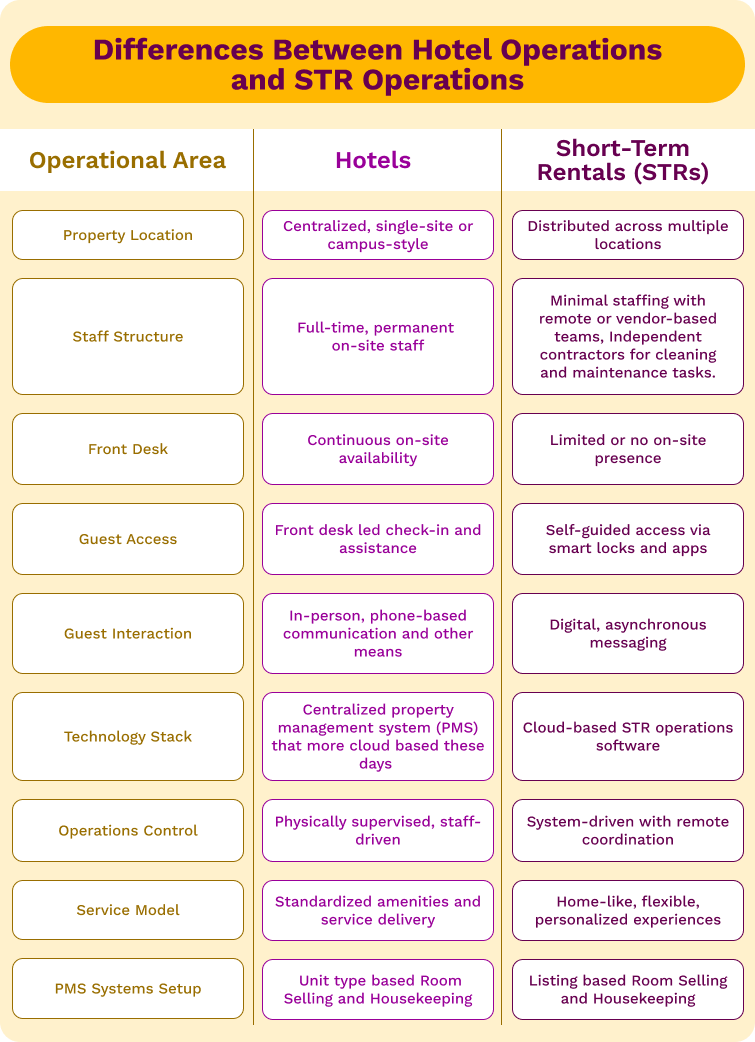
Hotels and vacation rentals function on very different operational foundations and hotel software doesn’t work for STR operations. Yet most technology decisions still come from a hotel-first mindset. When those systems are extended to STR operations, operators end up paying more in terms of efforts and painful operations stagnating the growth. Find out why that happens:
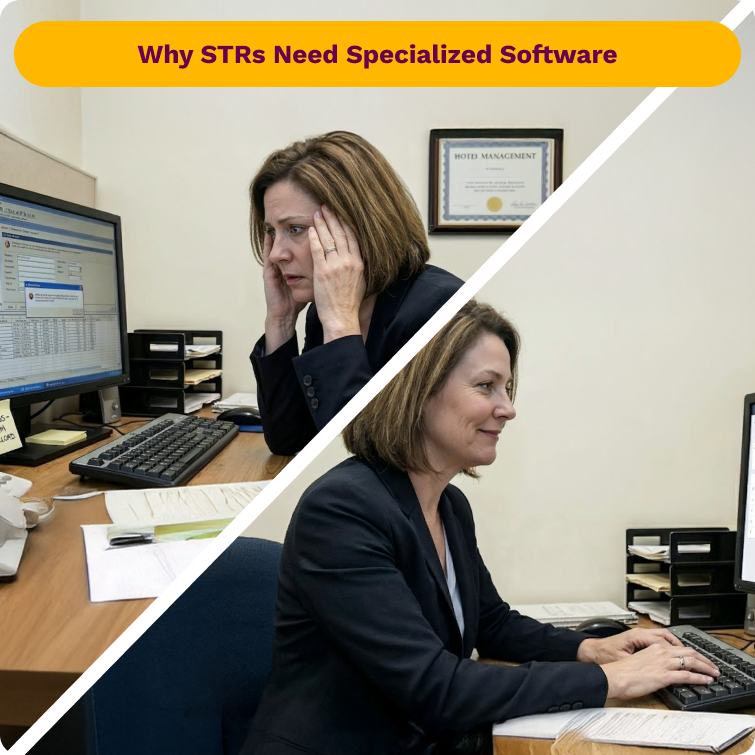
Using hotel-style systems for STR operations often feels efficient at first, but the costs surface slowly and compound over time. According to HotelTechReport, nearly 63 percent of hotel technology budgets are spent maintaining existing systems, while only 23 percent goes toward new software. When these systems are stretched to fit STR workflows, they demand constant configuration and workarounds without improving outcomes.
Manual coordination for cleaning, maintenance, and guest communication leads to missed tasks and delays. Inflexible pricing causes revenue leakage, while complex interfaces increase team fatigue and slow scaling. Over time, these hidden costs outweigh any perceived savings, showing that STRs need specialized software.
Whether you run a hotel or manage vacation rentals, staying competitive today is less about working harder and more about seeing clearly. Dharma was built from lived operational experience, not assumptions. Shaped by decades of work across STRs and boutique hotels, OPS reflects the real pressures of staffing gaps, guest expectations, and fragmented systems.
With a simple dashboard, centralized communication, a unified property knowledge base, AI support, and automated housekeeping and maintenance, Dharma brings clarity across properties and locations. Take control, streamline your operations, and elevate every guest experience, explore how Dharma can transform your property today.
What are Vacation Rentals?
Vacation rentals are fully furnished properties such as apartments, homes, villas, or homestays that are rented to guests for short stays. They are typically privately owned and designed to offer a more flexible, home-like experience.
How are Vacation Rentals different from hotels?
Vacation rentals focus on space, privacy, and independence, while hotels emphasize standardized services, on-site staff, and amenities. Operationally, STRs rely more on automation and remote management rather than front-desk-led workflows.
Can traditional hotel PMS manage short-term rentals?
A traditional hotel PMS can manage basic functions but usually lacks the flexibility needed for STR operations because the hotel PMS systems are unit based white STR room selling and housekeeping needs listing based software. STRs also need owner reporting features. So, a specialized STR software better supports distributed properties, vendors, and contactless guest journeys.
Why do vacation rentals need different technology than hotels?
Vacation rentals operate across multiple locations with no front desk, limited on-site staff, and heavy reliance on contractors and automation. Unlike hotels, STRs require systems that support contactless guest journeys, vendor coordination, dynamic pricing, and centralized communication across OTAs and messaging platforms. Hotel software is built for standardized rooms and fixed teams, which does not align with how STR operations function day to day.
What software do property managers use for short-term rentals?
Property managers typically use purpose-built hospitality softwares like Dharma OPS that combine property management, channel management, guest communication, pricing tools, and reporting. These systems are cloud-based and designed to manage multiple properties remotely, integrate with OTAs, automate operational tasks, and provide visibility across portfolios.
What features should STR management software have?
Effective STR software should centralize guest communication, support contactless check-in, automate housekeeping and maintenance, enable flexible pricing, manage multiple properties, track vendors, and provide clear operational and financial reporting. Since these features are rarely available in one platform, most property managers rely on 3–4 tools such as a PMS, OPS tool, pricing software, guest communication or CRM system.


.svg)


