
Attending travel and hotel conferences, trade shows, and industry events remains a key marketing and sales technique in hospitality. They support lead generation, partnerships, and brand visibility in a relationship-driven industry. When approached with intent, they also offer something deeper. They allow hoteliers to observe the market as it truly operates, understand where they stand, identify real customer challenges, and see where the industry is moving.
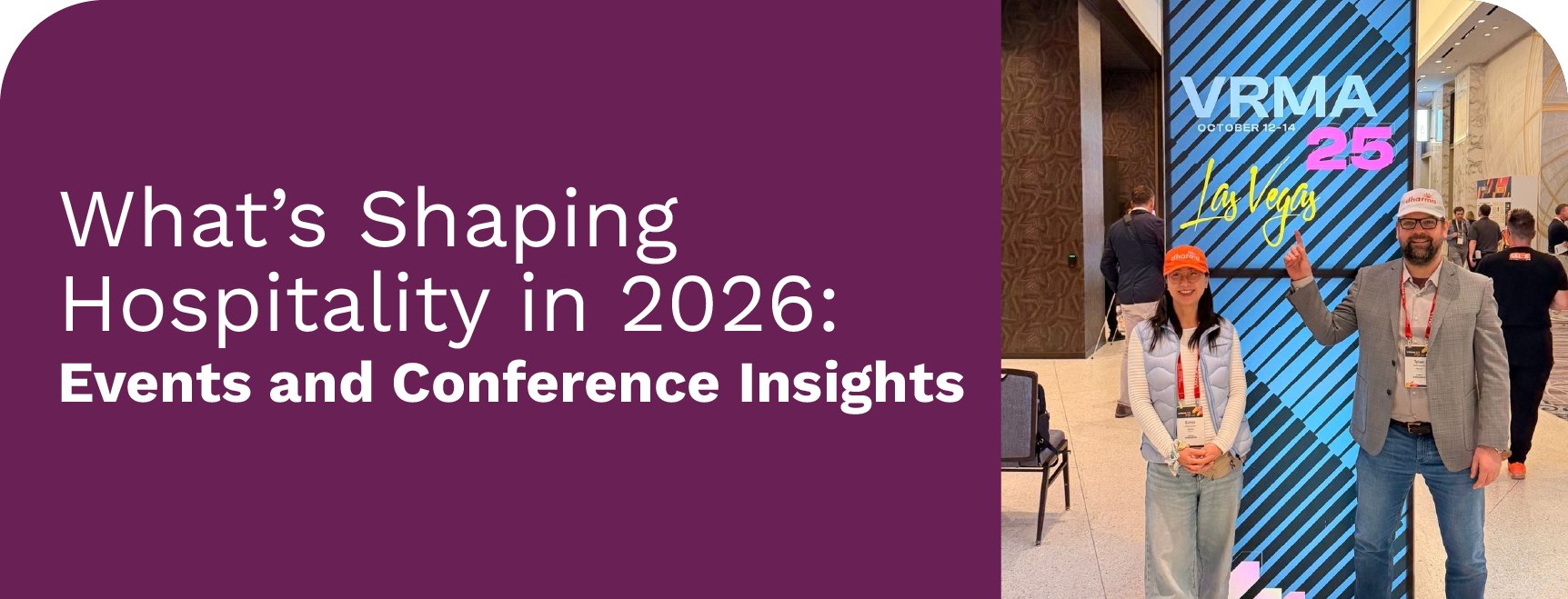
In 2025, the Dharma team attended hospitality conferences across multiple countries and market types. We gathered many operational insights and thought of listing them for you.
This blog isn’t a list of trends. It reflects what hotel teams consistently report on the ground, combined with data and our first-hand experience, to help hoteliers adapt to the 2026 market demand.
We do not attend conferences just for visibility. We attend because trade shows remain one of the few places where the entire hospitality ecosystem shows up in one room. Owners, operators, vendors, consultants, and competitors, all facing the same pressures at the same time.
We pay attention to what they’re really feeling: the questions operators ask after presentations, the problems discussed in corridors, the concerns raised during demos, and the features people want removed or added. These events capture honest reactions from real decision-makers that often shape hospitality tech buying decisions. Across regions, the signals we listened to pointed in a surprisingly consistent direction.

Across regions, 2025 marked a shift in how hospitality leaders spoke about the future. The focus moved from recovery to long-term structural change, from AI chatter to AI implementation.
Guest behaviour was a key driver for this major shift. Younger travellers are already using conversational AI to plan and manage trips. ETC report shows 26% of Gen Z and Millennials use AI tools. At the same time, labour shortages pushed operators to implement efficient operations and rely more on automation and data-led decisions.
Personalization also gained urgency. According to PwC, 65% of guests see personalization as central to their experience, and many are willing to pay up to 25% more for it.
Hoteliers shared similar insights that surfaced at the events we attended throughout the year, across Europe, the UK, Mexico, Middle East, and the US.
Across events, guest experience discussions quickly turned into operational ones. Hospitality teams spoke less about design and more about on-field execution and efficient operations. Because guests no longer judge hotels only by how they look, but by how smoothly everything works. When operations fall apart, rooms aren’t ready, check-ins are delayed, and the front desk absorbs the pressure. These moments are what guests remember and review, shaping your online reputation far more than design details.
This is why technology now matters so much in hotel operations. Simple, well-integrated systems give teams control when things get busy. They help staff move faster, stay organised, and still deliver personalised service, even on the busiest days. Hotels that get operations right – stand out!
The hype of AI settled in 2025, narrowing down to the practical AI use cases. As per Phocuswire, around 78% of hotel chains already use AI in some form, and 89% plan to expand usage in the next two to three years. “Hoteliers are more open to AI than before and modern tech implementation. Software that connects systems and stays in the background is now the expectation,” states Kyuhyun Choi, our CTO.
Guest communication through conversational AI, contactless check-in, synced guest requests across channels, revenue management, and maintenance task management came up often.
It is estimated that hotels use an average of 19 tech solutions in their tech stack. Many operators are looking for simple technology layers that integrate with existing systems rather than replace them. They are clear about what feels useful and what feels forced. “Housekeeping and maintenance staff often resist tools that require heavy data entry. The demand is rising for software that works seamlessly and is easy to adopt,” says Eunju Holvorsen, our CFO.
Conversations around robots for staff shortages, automation for vacation rental support, and AI-driven revenue management are increasing. Yet common concerns remain: AI hallucinations, poor integrations, unattended workflows, and insecure digital access.
“There is growing demand for all-in-one tools that actually talk to each other. Operators value systems that reduce mental load, keep information in one place, and support people during busy shifts rather than adding more screens to manage,” states Toivo Holvorsen, our CEO.
“As Gen Z and younger travellers earn and spend more, demand for personalized, experience-driven stays is rising. Hotels can no longer focus on rooms alone, there is a need for meaningful stay experiences,” says Eunju. Research backs that, 68% of travellers are more likely to remain loyal to hotels that deliver tailored experiences over traditional loyalty programmes. Guest preferences, past behaviour, and stay history now guide service and communication, making every stay thoughtful and memorable.
Effective data mining and analysis help uncover valuable insights, improving decision-making and operational efficiency. “Whoever has the right data, high-quality data will be the winner, and driver for further AI development," remarks Fang Liu, our Operations Head. As a result, data analysis is emerging as a major growth area in hospitality operations.
The systems that you chose today will shape your success tomorrow.
Tools that integrate easily, adapt to growth, and support teams during peak period will age well. Delaying operational upgrades increases risk as guest expectations and event-driven demand continue to rise. But Eunju advises, “Don’t try to do too much. Pick what you need and implement it step by step. Focus on your operations agenda, not the latest hot topic in the market.”
Beyond core operations, topics like robots, flexible spaces, virtual experiences, and cybersecurity are gaining attention. Yet the foundation remains the same: hotels that invest with a long-term view are better positioned to adapt and survive the tech revolution.

“These conference insights reinforced our focus at Dharma. We are doubling down on guest services through our OPS (operations) platform to make daily operations easier for managers and teams,” marks Toivo. With global events driving peak demand, our priority is technology that supports guest communication, housekeeping, maintenance, and a central view of guest and property data without replacing existing systems.
We are also intentional about what we avoid: overly complex tools and unnecessary automation. Humans should stay involved where they add value. These insights from 2025 continue to shape how we build and make your guests happier!
Want to try how our systems are based on the real operational needs? Check out the demo here.

.svg)