
Modern hospitality is facing a perfect storm: labor shortfalls are persistent, and guest expectations for instant service have never been higher. To survive, operators have been moving away from disconnected tools and toward autonomous systems that anticipate problems before they happen. Technology and automation, once viewed as luxury and innovation, are now essential standards demanded by the industry in 2026.
Until recently, AI in hospitality was mostly generative; it could write a nice email or answer a basic FAQ. However, it still required a human to take the actual action. If a guest asked for a late check-out, the AI would say “I'll let the team know,” but a human still had to go into the PMS and change the time.
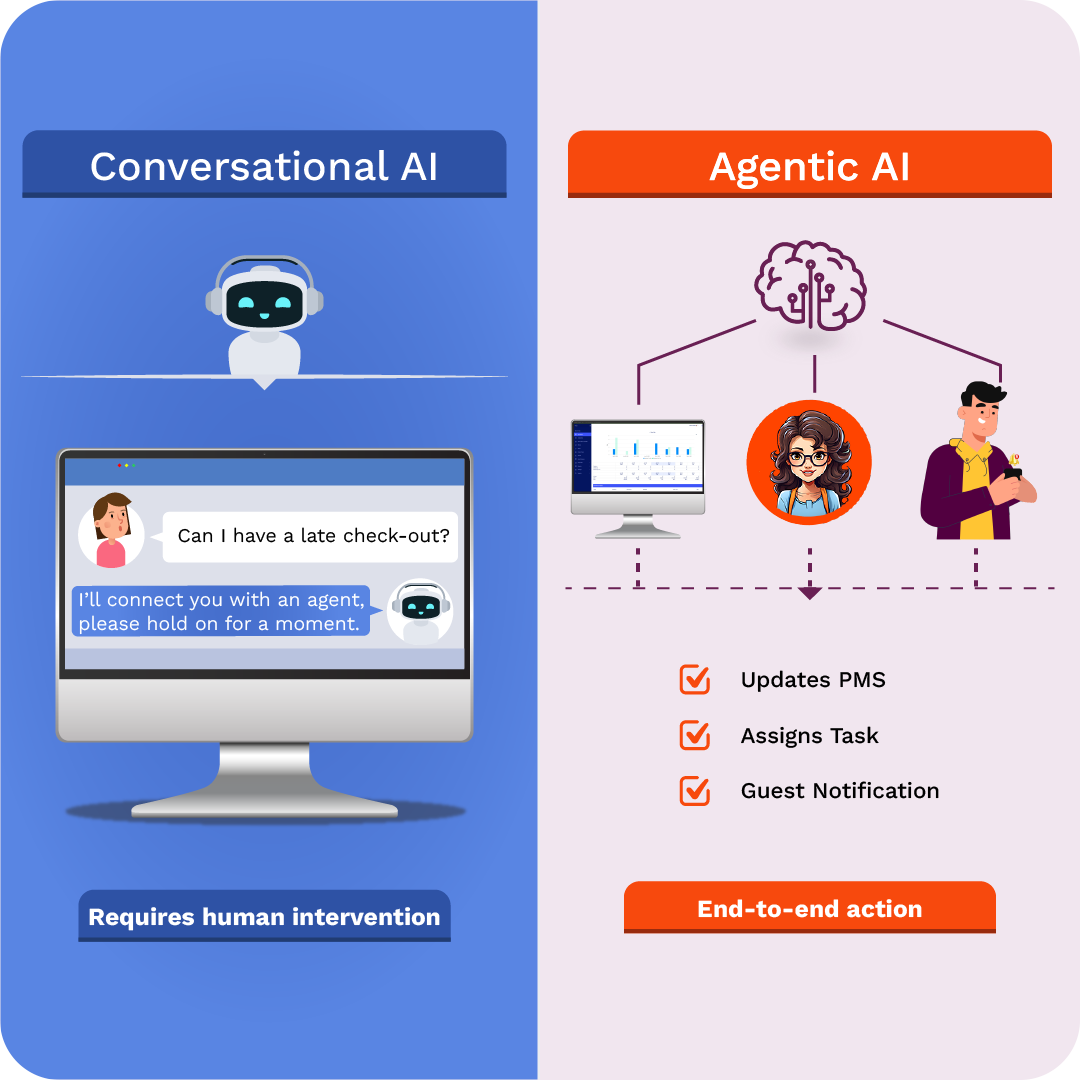
By 2026, we have entered the era of Agentic AI. These are autonomous digital team members that don’t just talk; they execute.
By connecting communication with your back-of-house systems, you close the loop on guest requests without manual intervention.
The biggest hidden cost in hospitality is the Fragmentation Tax. For years, operators have built or adopted tech stacks of isolated tools, one for messaging, one for cleaning, one for pricing, ect., that refuse to work together. This fragmentation exists because most hospitality software was built on legacy closed infrastructure; these tools were designed to solve one specific problem (like booking) without a native way to share data with other systems.
This lack of integration forces teams to waste hours every week manually syncing data between apps. Recent research by The Access Group reveals that this "Fragmentation Tax" is a massive operational drain, with hospitality managers wasting an average of 286 hours per year (roughly 36 working days) simply switching between disconnected systems.
The industry is now consolidating into Unified Operational Layers like Dharma’s Operations Platform (OPS). Instead of a separate app for everything,you have one brain that synergizes guest communication and essential operational tasks to drive peak efficiency and centralized data for business analytics.
Generic service is no longer enough. Guests in 2026 expect contextual personalization, a service that adapts to their specific reason for travel. If a guest is on a bleisure trip, they don't want a spa discount; they want to know if the Wi-Fi is stable and where the quietest workspace is.
According to Shiji Insights’ 2026 Hospitality Report, personalization is shifting from marketing gestures to operational mechanics. This means technology must recognize a guest's intent in real-time. Instead of asking repeated questions, your systems should use stay patterns to adjust service logic automatically.
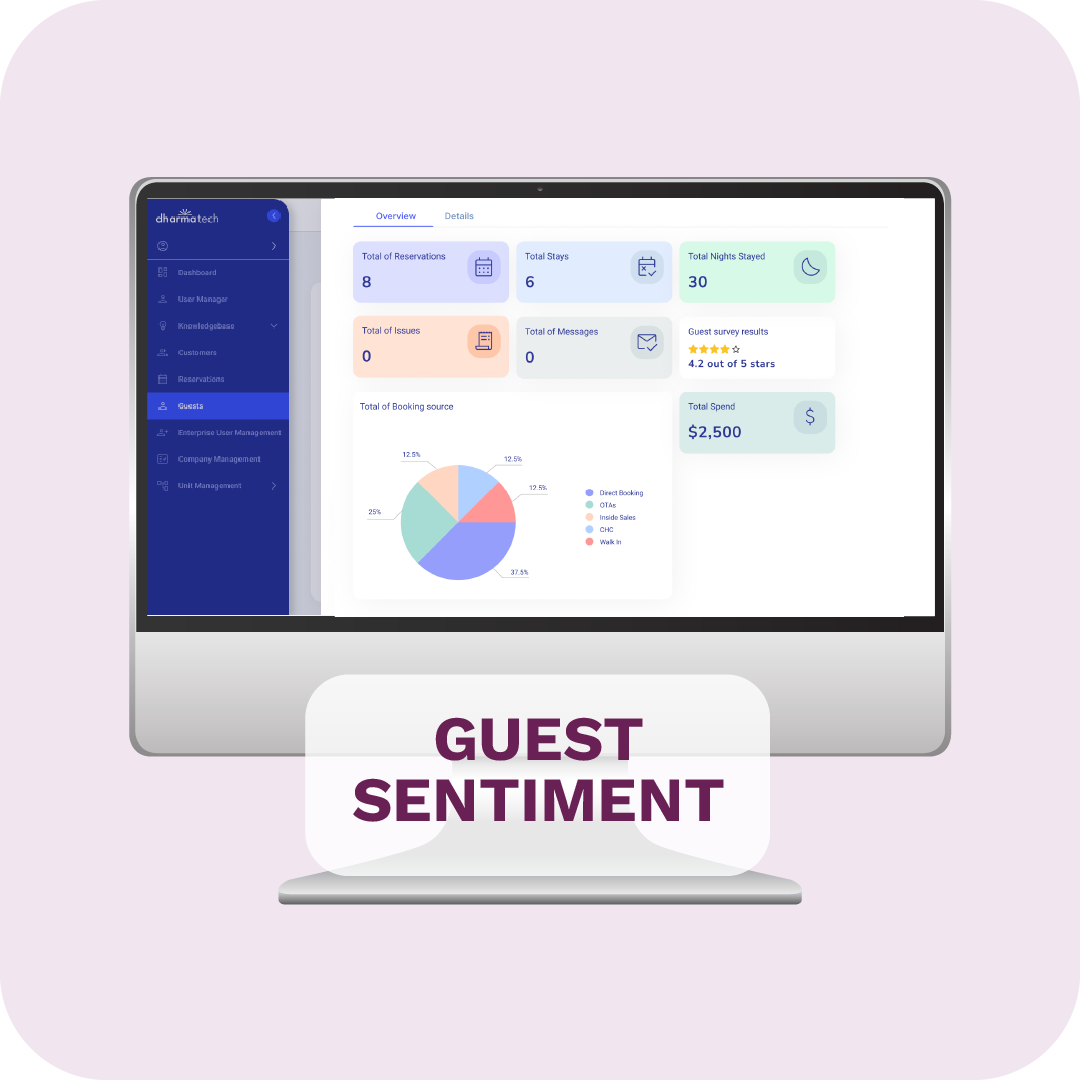
The EHL Insights Report 2026 highlights that moving from static guest profiles to real-time insights allows for:
This demonstrates the power of having a single view of your operations. When every department is looking at the same data, the risk of missed requests or duplicate work drops to nearly zero.
Sustainability has moved from a marketing extra to a core financial strategy. With energy costs remaining a top operational pressure, smart room orchestration, the automated control of HVAC and lighting, is becoming the industry standard.
Beyond saving on utility bills, properties that prove their green credentials are seeing a direct impact on their top-line revenue. A landmark study by Cornell University revealed that green-certified hotels can generate significantly more revenue, often reaching a 6% premium, compared to their non-certified neighbors. This is driven by "conscious travelers" who actively use sustainability filters on booking platforms to find eco-certified stays, making green tech a powerful tool for both cost reduction and market growth.
The line between traditional hotels and Short-Term Rentals (STRs) has blurred. According to recent PwC Hospitality Forecasts, the industry is shifting toward hybrid accommodation models where a single operator might manage a boutique hotel, a set of luxury apartments, and several standalone villas.
Managing this diversity has historically been an operational nightmare because legacy software was designed for either one or the other. Operators were forced to use different systems for a 50-room hotel than they did for their vacation rentals, leading to inconsistent Service Level Agreements (SLAs) and fragmented guest experiences.
The future lies in asset-agnostic technology. The vision behind Dharma OPS is to bridge this gap by focusing on the operation itself, not the property type.

The "2026 Way" is defined by consistency. By applying a single operational model to diverse property types, you protect your reputation as you grow, ensuring that your team, whether on-site or remote, follows the same perfect SOPs.
The shift from reactive firefighting to autonomous operations is no longer optional, it’s already happening. The hospitality operators winning in 2026 are those who have stopped relying on manual effort and started building their businesses on a unified, intelligent foundation. By consolidating your tech stack, you don't just improve your margins; you give your team the freedom to focus on the human touch that defines great service.
Ready to see if your operation is future-ready? Identify where gaps still exist in your tech stack and explore how we can support your next phase of growth with Dharma’s Operations Platform. Book a call with our team!

.svg)