
Guests are already on WhatsApp. The question is, are hotels and vacation rentals using it effectively?
With over 3.3 billion users across 180+ countries, WhatsApp has become the easiest way for guests to reach out, using the same app they use daily. It removes friction from booking and makes communication feel natural and immediate.
At the same time, guest expectations have shifted. Quick, conversational responses are now expected across the entire journey. Every unanswered question or delayed reply can directly impact a booking decision or the stay experience.
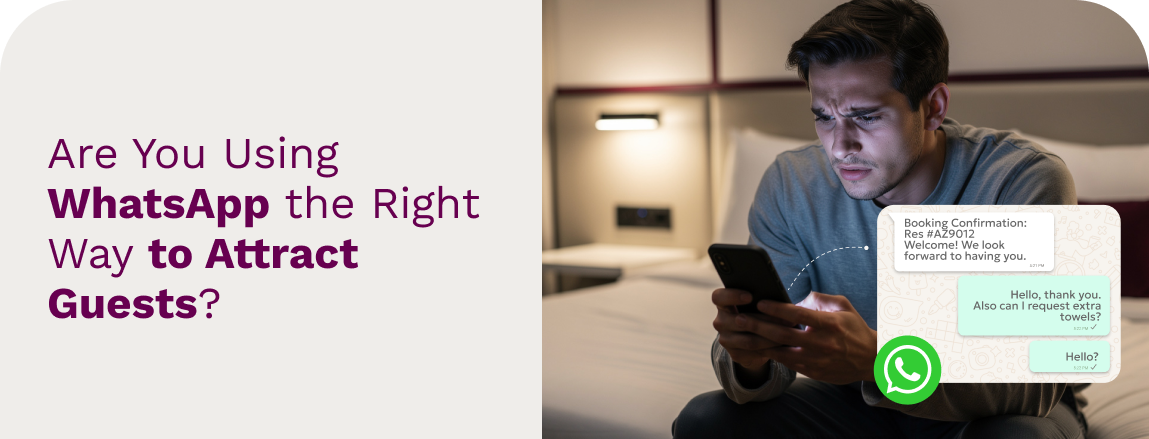
Yet many hotels still treat WhatsApp as a basic messaging tool, limiting its potential.
This blog explores how WhatsApp is shaping guest communication, where current setups fall short, and how to structure it to support both operations and guest experience.
WhatsApp has become an integral part of modern automated guest messaging platforms, connecting real-time communication with hotel operations. But most hospitality WhatsApp systems fail because they rely on basic tools not designed for operational scale. Here’s how:
No Centralized Inbox: Guest conversations are usually handled on personal devices, with no shared visibility across teams. This means other staff cannot see guest history, leading to missed messages, repeated questions, and poor coordination across shifts. At the same time, storing guest information on personal devices creates data security risks and limits control, especially for larger operations. Without templates or structured communication, responses vary across staff, leading to inconsistency.
No tracking or accountability: There is no structured system to track or assign requests. Guest queries are handled informally, with no record of ownership or resolution. As a result, requests get missed, delays increase, and service becomes inconsistent.
Dependency on group chats: With multiple WhatsApp groups for bookings and operations, important messages get buried in chat threads. This creates confusion, missed bookings, and added pressure on teams trying to keep up.
No integration with tech-stack: Since WhatsApp operates separately from PMS and task systems, there is no real-time connection to availability or guest data. This leads to incorrect information, manual coordination, and slower responses.
These limitations come from using the standard WhatsApp or WhatsApp Business app. In contrast, hotels using the WhatsApp Business API at scale, like OYO Hotels, have seen over 85,000 monthly conversions and message open rates as high as 98%, showing what structured, two-way communication can achieve when integrated properly.

WhatsApp-driven engagement can increase revenue by up to 27% as the messages are read within 5 minutes by around 80% of users, especially when combined with AI for instant, accurate responses.
When WhatsApp is integrated with your PMS, operations and centralized inbox, communication becomes structured, visible, and actionable across teams. Conversations are no longer tied to one device. A shared inbox ensures full visibility, so teams can access guest history, respond consistently, and coordinate across shifts without confusion.
Real-time data allows accurate responses during pre-booking, helping convert inquiries into direct bookings or upselling and reduce dependency on OTAs. Guest messages during stays are requests that can be tracked, assigned, and resolved within the system, bringing accountability and reducing missed or delayed service. Instead of messages getting buried in groups, every interaction is organized and linked to the guest and reservation.
As message volume grows, automation and structured workflows help teams manage scale without increasing manual effort. Consistent templates and multilingual support ensure clear communication, while centralized data improves security and control.
Across the guest journey, this translates into faster responses, better coordination, improved conversions, and a more reliable guest experience.
For most hotels and short-term rentals, the real challenge is making Whatsapp work as part of the operational workflow. Whatsapp can be used to its full potential with these abilities:
Unified Inbox: A strong setup starts with a centralized team inbox where all guest conversations sit in one place, accessible to front desk, housekeeping, and support teams. Multiple staff can respond, with full conversation history, so nothing is lost across shifts or properties.
Centralized Data: Next is connectivity to property database of room types, services, offers, and policies. This allows teams to deliver consistent accurate responses and suggest relevant upgrades instead of generic offers.
Tech-Stack Integration: The real shift happens when messages connect to operations through your PMS, POS, or CRM. A booking triggers a Whatsapp confirmation and guest request becomes a task, assigned to the right team and tracked until completion. This removes manual coordination and follow-ups.
AI Powered: With AI and human collaboration, repetitive queries are handled instantly, which matters because delays cause purchase abandonment for 56% of users. Complex requests are passed to staff without losing context.
Personalized Guest Messages: Finally, guest profiles enable personalization. Past stays, preferences, and booking details help teams respond with context, not repetition. This matters, as engagement increases for 72% of users when messages are personalized.

WhatsApp enables hospitality operators to improve both revenue and operational efficiency by streamlining guest communication on a platform guests already use. Faster response times and real-time support help capture more bookings and improve conversions, while consistent messaging enhances the overall guest experience.
At the same time, automation reduces staff workload and manual effort, allowing teams to manage higher volumes without added pressure. This results in better guest satisfaction and more efficient operations at scale.
Hospitality teams manage a high volume of repetitive communication every day, from booking confirmations to in-stay requests. By integrating with existing hotel systems, Dharma OPS brings structure to this flow and connects guest messaging directly with operations.
This approach helps your teams stay coordinated, reduce manual effort, and deliver a satisfactory guest experience.

WhatsApp works best as an additional communication layer, not a replacement for your core systems. Over-reliance can create gaps as operations scale. Here’s how to use Whatsapp effectively:
Most hotels have not yet integrated WhatsApp effectively. Only 12% include it in marketing strategy, while 63% either do not use it or limit it to basic updates as per State of Data-driven Marketing in Hospitality. This creates a clear opportunity.
Hotels that approach WhatsApp with operational thinking can improve response times, guest satisfaction, and direct bookings. Early adoption with the right system helps build stronger guest relationships while keeping communication controlled, consistent, and scalable.
If your team is already using WhatsApp daily, the next step is structuring it with your operations. Explore how our Dharma OPS can help you do that.

.svg)