
The modern traveler is no longer content waiting in a lobby for a printed map or calling the front desk to ask about breakfast hours. We live in an era of "instant everything," where guest expectations for immediate, digital communication have skyrocketed. If a guest can order a meal with a single tap, they expect the same level of frictionless interaction from their accommodation provider.
However, many operators are struggling to keep up. Managing communication across WhatsApp, SMS, email, and various OTA (Online Travel Agency) platforms often leads to a fragmented mess. Messages get missed, staff get overwhelmed, and the guest experience suffers. This is why integration-first solutions are now essential for survival.
This guide is designed to be your actionable roadmap for navigating the crowded landscape of guest messaging software, steering away from manual chaos and toward streamlined, professional communication.
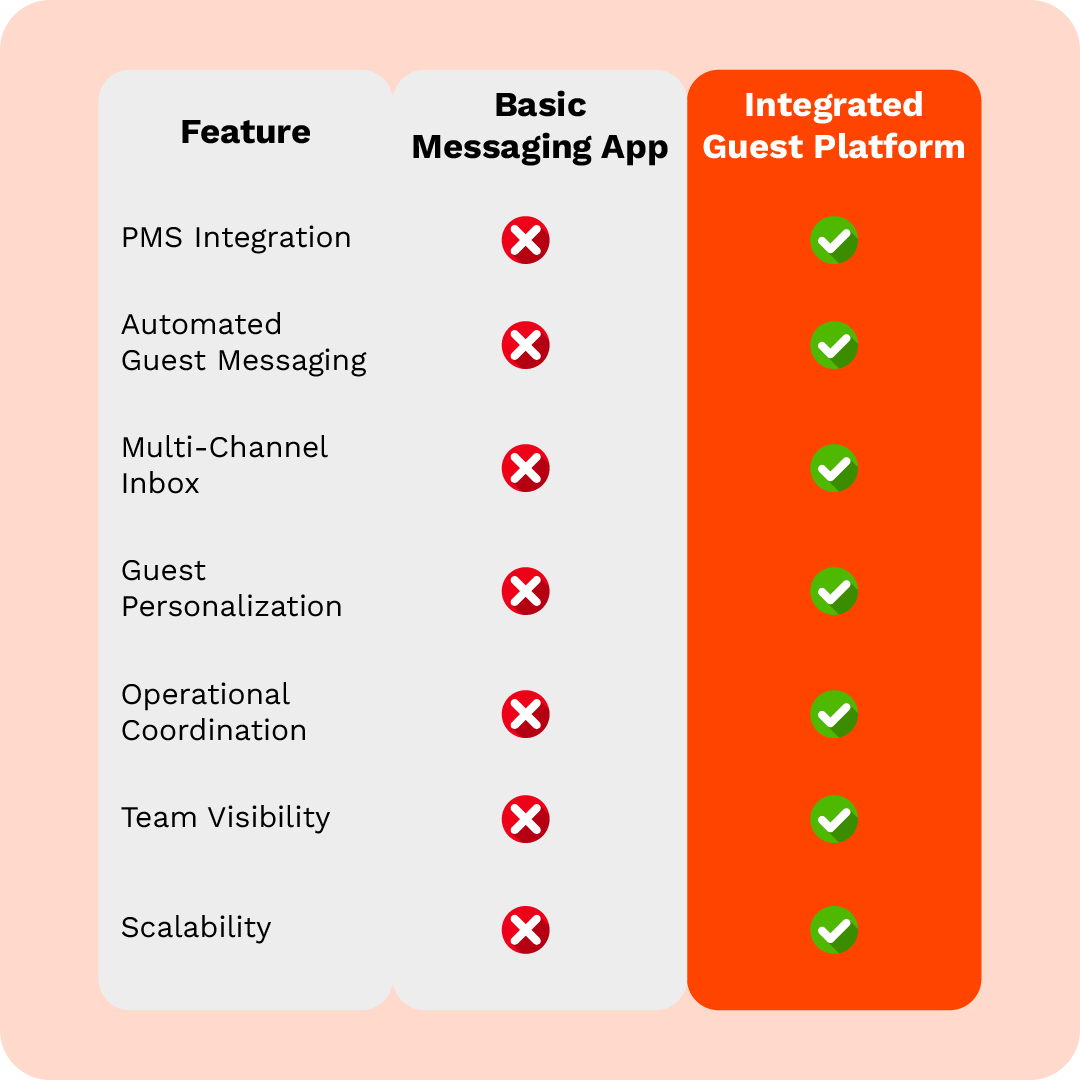
At its simplest, an automated guest messaging platform is a centralized hub designed to manage every interaction between a host and a guest. But there is a massive difference between a basic messaging tool and a professional hospitality platform.
Using a standard WhatsApp Business account or a basic SMS app is better than nothing, but it creates data silos. A professional platform pulls messages from every channel (Airbnb, Booking.com, VRBO, direct SMS, and WhatsApp) into a single, unified inbox. This ensures that regardless of how the guest reaches out and whether the guest switches between communication channels, your team sees it collectively in one place.
The automated part refers to the software's ability to send messages based on specific triggers, like a confirmed booking or a check-in time. However, the best tools allow for dynamic personalization. Instead of a cold, robotic template, the system uses shortcodes to automatically insert the guest’s name, their specific property address, and their unique Wi-Fi code.

If you take nothing else away from this guide, remember this: A messaging tool is only as good as its connection to your Property Management System (PMS).
Your PMS is the brain of your operation; it holds the dates, the guest names, the payment status, and the room assignments.
When your messaging platform is synced with your PMS, you unlock Automated Triggers. For example, the moment a guest is marked as checked-in in your PMS, the messaging tool can wait 20 minutes and then automatically send a text: "Hi Sarah, we hope you're settling in! Here is the code for the gym..."
This reduces manual work to near zero and ensures real-time updates. If a room isn't ready, the system knows not to send the welcome text yet.
When you start shopping for a provider, don't get distracted by flashy UI. Look for these core pillars:
You should be able to build a sequence for the entire guest journey. This includes a booking confirmation, a 3-day-prior check-in guide, a mid-stay check-in, and a post-stay thank you.
Your guests have preferences. A platform should ideally support:
Can the tool distinguish between a first-time guest and a VIP loyalist? Can it send different instructions for your penthouse suite versus your standard studio? Smart segmentation ensures you aren't sending irrelevant information to the wrong people.
Modern platforms now use AI to suggest replies to common questions. If a guest asks "What's the Wi-Fi password?", the AI can draft the response for your staff to approve with one click, or even send it automatically. According to Skift’s reports on hospitality tech, AI-driven responsiveness is a top driver for guest satisfaction scores.
As mentioned previously in this blog, guests should never have to download an app. Everything should happen via their native messaging apps or a web-based Guest Portal that looks great on a smartphone.
Avoid these frequent pitfalls that many hospitality managers fall into:
Effective communication is about the entire lifecycle of the guest relationship.
The period between booking and arrival is often a black hole of communication. Use this time to build excitement and reduce anxiety. Send a digital guidebook and offer an early check-in upsell if available. This builds trust before they even step foot on your property.
This is where you win the 5-star review. A simple automated message sent the morning after arrival asking, "How was your first night? Is there anything we can do to make your stay better?" allows you to catch and address issues before the guest leaves.
Beyond individual check-ins, proactive communication during the stay also plays a key role in shaping the guest experience. For example, sending targeted updates to in-stay guests about scheduled maintenance, neighborhood events, or situations that may impact their travel plans helps set expectations early and reduces friction. When guests feel informed rather than surprised, satisfaction improves, and small operational moments can turn into positive experiences.
Once the guest checks-out, the conversation shouldn't end. Send an automated thank you with a direct link to your preferred review platform (Airbnb, TripAdvisor, Google, etc.). Studies from Cornell University’s Center for Hospitality Research show that prompt, digital follow-ups significantly increase review volume and ratings.
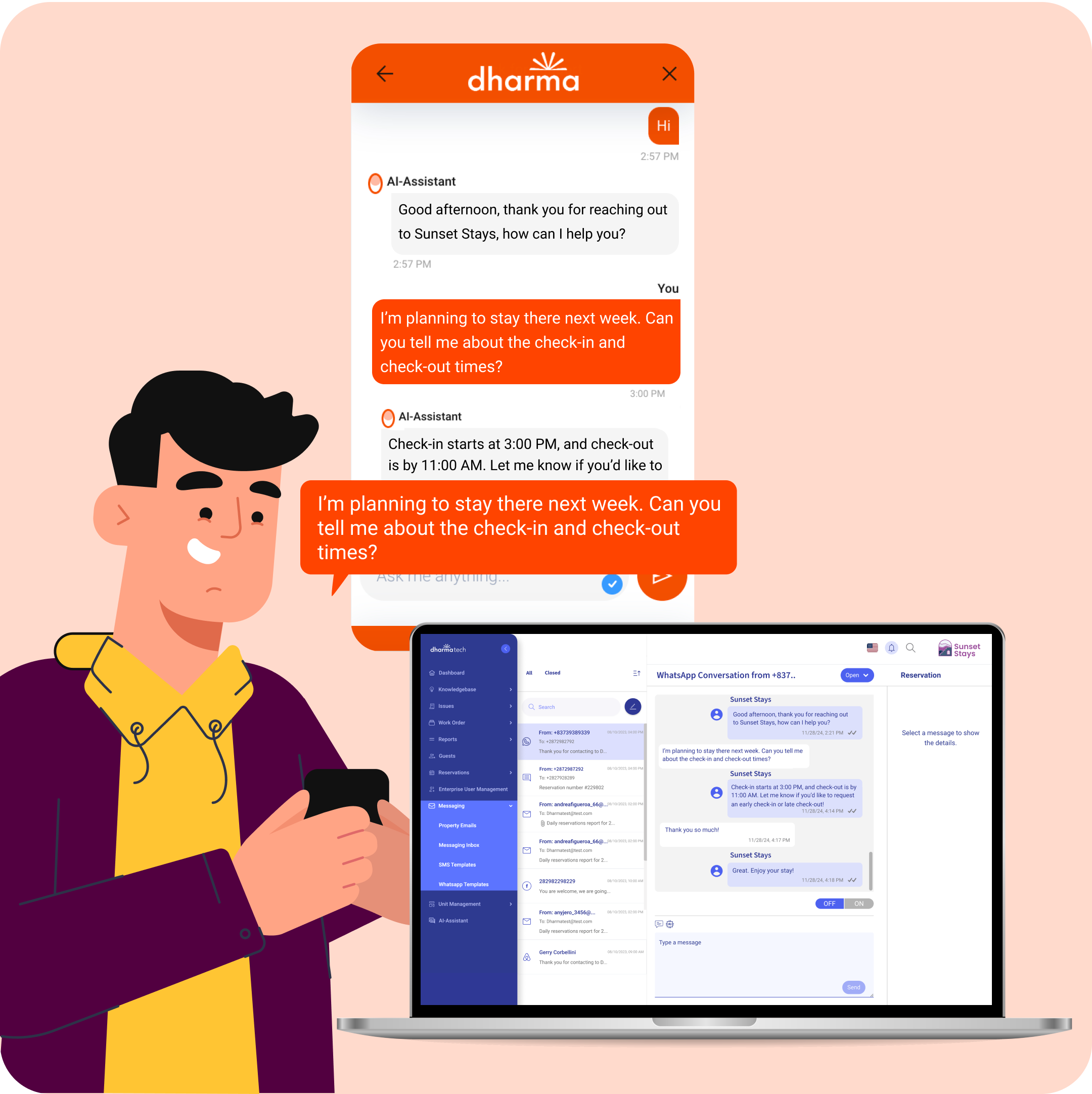
At Dharma, we understood that communication shouldn't live in a vacuum. That’s one of the reasons why we built our Operations Platform (OPS), a platform where guest messaging is deeply integrated into your actual operations.
Most messaging tools are just for talking. Dharma OPS connects the talking to the doing. If a guest messages saying they need more towels, that message isn't just a text; it can be turned into a task for your housekeeping team instantly within the same system.
Today, Dharma OPS focuses on structured guest journey messaging, with automated templates triggered by reservation milestones to ensure timely and consistent communication throughout the stay lifecycle.
As hospitality operations evolve, we’re also moving toward more flexible “broadcast messaging” capabilities, allowing teams to send targeted updates to specific groups of guests when needed. This will support real-world operational scenarios such as maintenance notifications, service updates, weather alerts, or event-related communications, helping teams deliver proactive communication at scale while maintaining full visibility within the platform.
We don't believe in manual entry. Dharma OPS is built to pull real-time data from your PMS, ensuring that every automation is accurate and every guest detail is at your team's fingertips.
While we empower you with powerful automation, we also provide the control center your management team needs. You can monitor team response times, view message history across all properties, and ensure that the human touch is never lost.
Choosing a guest messaging platform is one of the most impactful tech decisions you will make this year. To get it right, move away from the lowest price mindset and move toward an integration-first strategy.
By prioritizing a tool that syncs with your PMS, offers multi-channel support, and allows for deep personalization, you aren't just sending texts, you are building a scalable guest experience.
Ready to see how integrated messaging can transform your operations?
Book a demo and let us show you how to turn your guest communication into a competitive advantage.


.svg)