

When you manage 100+ rental units across multiple cities and owners, no two properties are exactly alike. Each owner has different expectations, each property has its own setup, and every location comes with its own operational challenges.
But guests expect the same thing every time: a clean, comfortable, and reliable stay, whether they book a one-bedroom apartment in one city or a villa in another.
Meeting those expectations across a growing portfolio takes more than good hospitality. It requires consistent processes, clear communication, and the right operational systems. In this blog, we share what we’ve learned from managing properties with different owners and how hospitality operators can deliver a consistent guest experience at scale.
To keep the guest experience consistent, what we’ve learned comes down to this: the fix is not hiring better cleaners. It’s building a consistent housekeeping and inspection system that works at every property, whoever owns it.
Why Housekeeping Gets Inconsistent Across Distributed Properties
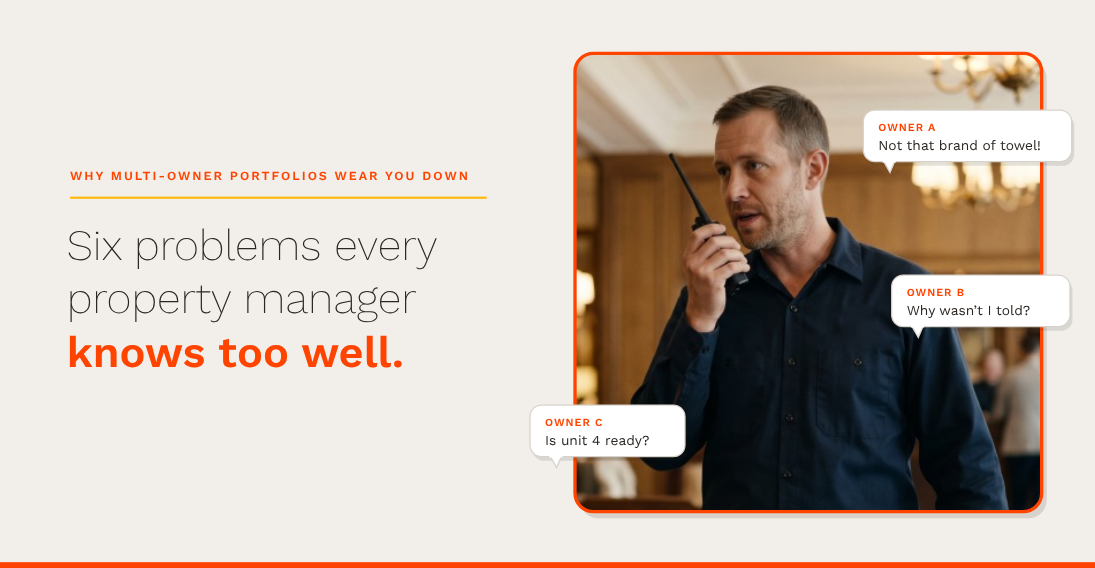
Even with properties of a single owner, there can be inconsistencies. For multiple owners, you are more likely to observe inconsistencies early on. And soon you will realize, the common factors that cause them could be:
- Owners have different tastes: One wants premium toiletries, another wants minimal supplies. One cares about towel folding; another doesn’t.
- “Clean” means different things: Without clear instructions, every local housekeeping team uses its own definition.
- You can’t be everywhere: You can’t physically visit every unit after every turnover, especially across cities.
- Problems surface late: We usually find out after a guest complains or leaves a review. By then the damage is done.
- Substitutions break things: When a regular cleaner is unavailable, the replacement works from guesswork.
- There’s no shared view: Last-minute cleaner substitutions add another variable. Replacement staff may not know the property's specific requirements, and verbal instructions can easily be missed. Without centralized visibility, you couldn’t tell you which properties were meeting the standard on any given day.
Create One Housekeeping Standard for Every Property
The first step is defining exactly what guest-ready means across the portfolio. A general instruction to clean the apartment is not enough. Teams need clear, actionable requirements they can follow regardless of location or ownership. Some standard processes we use are:
Build a single checklist structure: Create a standardized checklist covering bedrooms, bathrooms, kitchens, living areas, linens, amenities, supplies, and visible maintenance issues. For example, a bedroom checklist might include changing linens, checking under the bed, removing waste, testing lights, and confirming that the room is presented according to the agreed standard.
Separate non-negotiables from property-specific tasks: Separate non-negotiable requirements from property-specific instructions. Every unit should meet the same core cleanliness and guest-readiness standards, but individual properties may require additional tasks based on their layout, amenities, or owner agreements.
Use photo references: Photo references can make these standards easier to follow. Images showing the expected bed presentation, bathroom setup, or placement of amenities provide a practical reference for new and replacement cleaners.
Keep it practical: Keep checklists concise enough to use during every turnover. An overly complicated process encourages staff to rush through tasks or treat the checklist as paperwork rather than a working tool.
Owners can have different properties and preferences, but the guest-facing cleanliness standard stays the same.
Build Inspections Into the Housekeeping Workflow
A cleaner marking a task “done” doesn’t mean the unit is ready. We learned this the hard way, through a few check-ins that went poorly.
We now run a fixed workflow: Right Hand Inspection → Clean → Self-check → Inspection → Issue resolution → Property ready
Each step has a purpose. The self-check makes the cleaner review their own work first. The inspection catches what they missed: stains, damaged items, low supplies, or a maintenance problem like a leaking tap or a dead bulb. All of it gets caught before the guest arrives, not after.
A few rules keep this workable at scale:
- Define when inspection is mandatory
- Record every result
- Require photo evidence for exceptions
Centralize Oversight Without Being Physically Present
When properties are distributed across cities, centralized oversight must replace the assumption that a manager can physically check everything.
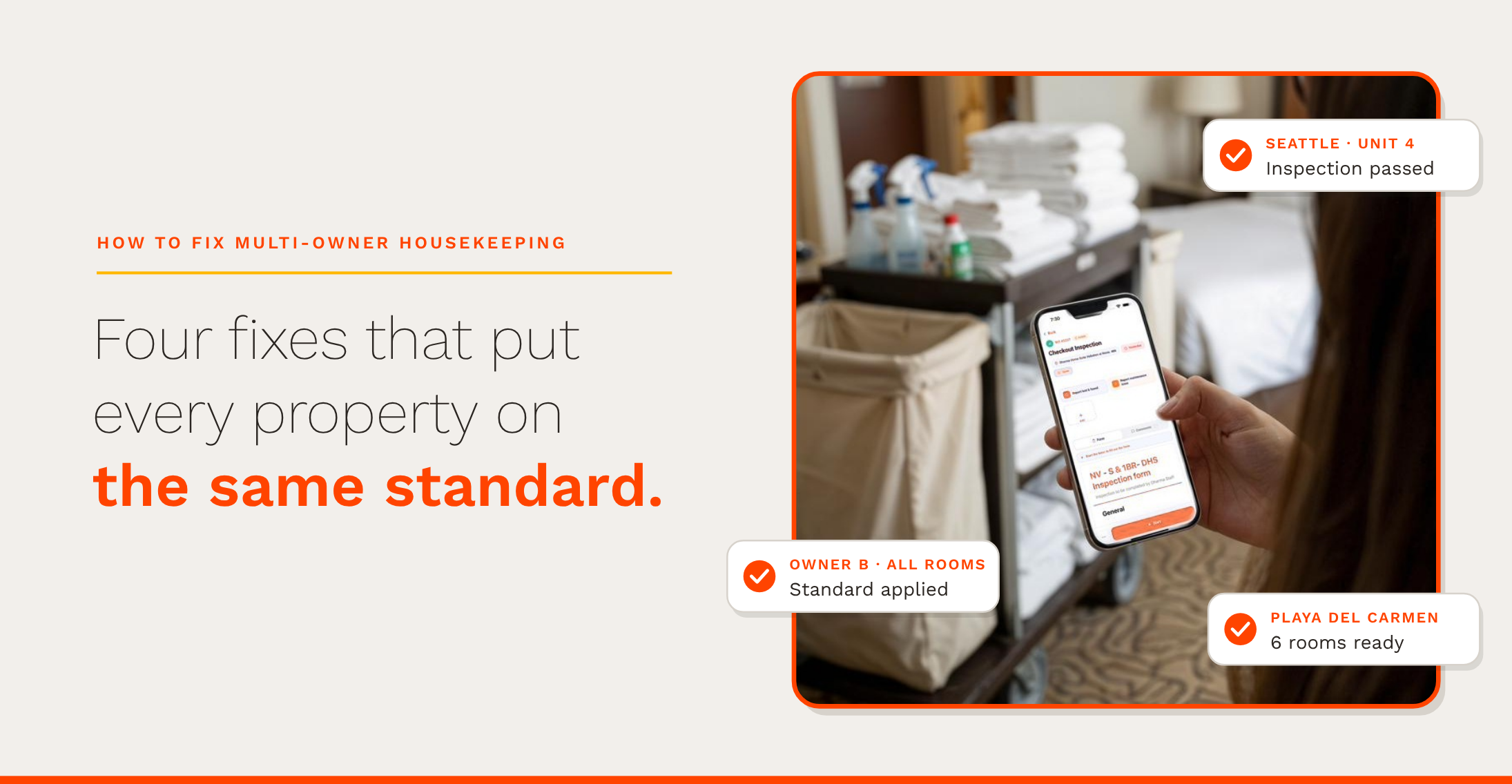
Every central operations team needs to see, at any moment, which units are cleaned, inspected, pending, or flagged with an issue. If you run this system on phone calls, WhatsApp threads, and scattered spreadsheets, information will get lost constantly. A problem reported at 4 PM in a chat group could easily be missed before a 6 PM check-in.
Recurring problems should also be visible. If one property repeatedly fails the same inspection item, managers can investigate whether the cause is ambiguous instructions, inadequate training, insufficient supplies, or inconsistent execution.
Technology can support this process, but the operating model matters just as much. Teams need agreed procedures for assigning work, escalating problems, and confirming completion. Otherwise, digital tools simply reproduce the same fragmented communication in another format.
Use Data to Improve Housekeeping Across the Portfolio
Once inspections are recorded, you stop firefighting and start diagnosing. The right data helps you:
- Find weak spots: A single missed task is an accident. The same task missed at five properties is a process gap. Some properties will show frequent missed tasks, repeat maintenance issues, or late turnovers. Those need attention first.
- Diagnose repetitive issues: Compare patterns across locations to work out whether the problem is the SOP, the training, the staffing, or the execution. Each has a different fix. Retraining a team won’t help if the checklist itself is unclear.
- Complaints & inspection records: When a guest flags a dirty bathroom, check what the inspection logged for that turnover. The gap between the two tells you where the system is leaking.
- Keep updating: Revise checklists and training based on what the data shows.
Over time, you shift from reacting to complaints to preventing them.
Conclusion: One Standard, Multiple Properties
Distributed properties do not need distributed operating standards. Owner-specific requirements can remain part of the process without compromising portfolio-wide cleanliness and guest readiness.
Dharma Remote Service Management and Dharma OPS can support this operating model by bringing technology and operational services together. Dharma OPS provides the operational foundation for coordinating workflows, while Remote Service Management can support housekeeping coordination, inspections, and issue follow-up according to the agreed service scope.
For multi-owner property managers, the objective is straightforward: establish clear standards, make responsibilities visible, and build a repeatable process that helps every property deliver a consistent guest experience, regardless of its location or ownership.
If you have multi-owner properties, let us build standardized processes for you. Interested? Book a call.