

Legacy hospitality tech was built for single-property models, either exclusively for hotels or strictly for vacation rentals.
Today, forward-thinking hybrid property operators are intentionally mixing hotels, apartments, and villas to capture new traveler demographics. And the market is moving incredibly fast. The global serviced apartment market was estimated at $139 billion in 2025 and is projected to reach $379 billion by 2034, growing at an annual rate of nearly 11.85%.
But running a diverse portfolio on fragmented software creates massive operational debt. While hybrid hospitality is a highly profitable model, it requires the right tech stack to turn operational complexity into a strategic moat rather than a liability.
In this blog, we’ll look into how the right tech stack works for hybrid properties to deliver a level of operational consistency that currently feels impossible.
The Real Pains of Hybrid Operations
Imagine it's 10 a.m. One villa needs a deep, four-hour clean after a week-long family stay. Two extended-stay apartments require mid-stay refreshes on their own cadence. Six standard hotel rooms need quick turnovers before a 3 pm check-in wave.
A stressed property manager and clearly show multiple property types around him or in the background. Show an apartment building, a villa, a glamping tent as various types of properties.
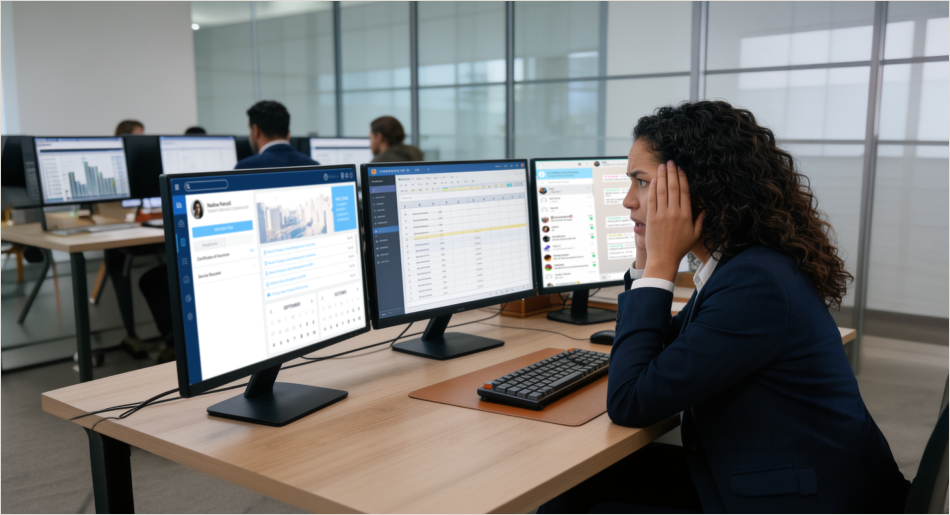
Now imagine your housekeeping supervisor checking a traditional PMS for the hotel rooms, a vacation rental platform for the villas, an Excel spreadsheet for apartment cleaning schedules, and a flood of WhatsApp messages for last-minute guest requests.
This is the daily reality for many hybrid hospitality operators. This is the exact moment hybrid hospitality breaks down. Not during a crisis, but during an ordinary morning.
The challenge isn't managing more properties. It's managing different operational models at the same time:
- Inventory Management Complexity: A hotel sells room categories. A vacation rental or serviced apartment sells individual units, each with its own pricing logic, stay restrictions, and cleaning requirements. Forcing both models into a single legacy PMScreates availability gaps, incorrect dynamic, and revenue leaks across channel distribution.
- System Fatigue: Juggling different PMS, channel managers, booking engines for each inventory type leads to data silos and grueling manual reconciliation. Every hour spent fixing data mismatches is an hour taken away from the guest.
- Logistical Chaos: Hybrid portfolios are often geographically distributed, requiring intense coordination between housekeeping, maintenance, staffing, and third-party contractors.
- Fragmented Guest Communication: A hotel guest may expect concierge services, while a villa guest values privacy and frictionless self-check-in. Meanwhile, a long-stay corporate tenant needs scheduled maintenance coordination. Without a unified guest profile, every communication starts from zero.
- Reporting and Visibility Gaps: When your hotel data lives in one system and your rental data in another, you cannot accurately compare portfolio performance across your portfolio without manually pulling exports and building complex spreadsheets.
Hospitality already faces an annual employee turnover of around 74%, and fragmented systems only add to the pressure. As hybrid portfolios grow, so does operational complexity. The result is heavier workloads, higher technology costs, compliance challenges across different stay models, revenue leakage, and increased risk of overbookings.
How a Unified Operations Platform Creates Seamless Hybrid Experience
The best hospitality technology is almost invisible. A guest books a stay, they receive the right communication at the right moment, the right team member handles their unit correctly, and nothing falls through the cracks — whether they are in an apartment on a 30-night stay or a villa for a long weekend.
Achieving this requires a unified operations layer that understands every unit type natively. Here’s what hybrid operators should look for in an unified operations platform:
- A single source of truth means inventory, reservations, and guest profiles across all property types live in one centralized data layer. When a booking is updated, every downstream workflow reflects it immediately
- Workflow automation calibrated to unit type so your housekeeping team gets one clear schedule every morning. Villa deep clean is treated differently from a hotel room refresh, because the system understands they are different objects, not just different room categories. Housekeeping schedules, maintenance requests adjust based on stay length and inventory type.
- Personalized Scaling means guest journeys adapt without manual configuration. The villa guest gets self-check-in instructions and a privacy-forward experience. The hotel guest gets concierge-style communication. The logic lives in the platform, not in someone's memory or a manual override.
- Unified Guest Messaging through one inbox for all channels for every property type. No guest waits three hours for a response because their message went to a system nobody checks after 5 p.m.

A connected operations platform automatically adapts communication, housekeeping frequency, inspections, and operational workflows based on the property type, guest profile, and length of stay without creating additional manual work.
How Dharma Solves the Hybrid Challenge
This is exactly the operational challenge Dharma Hospitality has experienced firsthand through Dharma Home Suites (DHS), where fully-furnished apartments, and extended-stay accommodations operate together every day.
Over the years, DHS properties have been onboarded, offboarded, renovated, repositioned, and operated across different stay models. That flexibility is where most platforms break. Dharma PMS and OPS were built for it.
Callout box:
💡 The Operator's Reality
Many hybrid operators run different PMS platforms for different property types and end up with fragmented reservations, guest profiles, and operational data as a result. We faced the same problem. Instead of adding another integration layer, we built a custom PMS that handles all property types within a single data model. Even if you continue using your existing PMS platforms, Dharma OPS runs as an operational layer on your tech stack.
During the FIFA World Cup, Dharma Home Suites was managing hundreds of units across multiple properties at peak demand, with zero room for coordination failure. Dharma OPS gave the team a single, clear view of the entire portfolio: every unit, every task, every guest conversation in one system.
Housekeeping schedules adapted to rapid turnover. Guest communications went out accurately, on time, calibrated to each unit type. Work orders were raised and resolved without falling between platforms. Guests noticed, leading to stellar reviews, repeat bookings, and the kind of quiet satisfaction that comes when everything just works.
That's what "built by operators, for operators" looks like in practice.
Choosing a Strategic Growth Path for Hybrid Operators
Hybrid hospitality is no longer about managing different property types. It's about delivering a consistently excellent guest experience across them all. Operators that build connected technology foundations today will scale faster, make better data-driven decisions, reduce overhead, and adapt easily as their portfolios expand.
Over the next decade, guests won't think in rigid categories like “hotel”, “apartment”, or “villa”. They'll simply choose the experience that best fits the context of their trip. The businesses that unify their operations behind the scenes will be the ones defining the future of hospitality.
Managing a hybrid portfolio? See how Dharma OPS helps hotels, serviced apartments, and vacation rentals operate as one connected business even without replacing your existing technology stack.