


For mid-sized property owners, the daily reality is a constant balancing act. You are managing a hotel or boutique stay that is large enough to face a high volume of inquiries but often lacks the massive reservations department of a global chain. When the front desk is busy checking in a line of guests or handling a local event, the phone rings and the website chat stays silent.
This gap in communication is where direct revenue disappears. Prospective guests today prioritize speed above almost everything else. If they cannot find out if the pool is heated or if there is an airport shuttle within thirty seconds, they often revert to an Online Travel Agency (OTA) where the information is standardized, or worse, they book a competitor. To win back these bookings, mid-sized properties are turning to a digital concierge that never sleeps.
Why Mid-Sized Properties Struggle to Own the Relationship
Mid-sized properties occupy a difficult middle ground. You provide a personalized experience, yet you don’t have the round-the-clock digital support team of a 500-room resort. This leads to a common friction point: the staff is spread too thin. When a team member has to choose between a guest standing in the lobby and an anonymous person asking about parking rates on the website, the lobby guest always wins.

The result is a delayed response. Research consistently shows that lead response time is the most critical factor in conversion. According to the foundational Lead Response Management Study, the odds of qualifying a lead drop by 21 times when the response time increases from five minutes to thirty minutes. In hospitality, those twenty-five minutes are the difference between a direct reservation and a guest clicking away to an OTA.
Furthermore, when inquiries are handled across fragmented channels like emails, social media, and phone calls, guest data becomes scattered. Without a centralized way to capture these early-stage leads, the property loses the chance to own the relationship from the very first touchpoint.
What a Hospitality Chatbot Does for Direct Guest Capture
A hospitality-specific chatbot does not replace your team; it acts as a filter that keeps the path to purchase clear. By handling up to 80 percent of routine inquiries such as questions about check-in times, pet policies, or breakfast hours, the bot ensures that the front desk only steps in for complex, high-value human interactions.
This technology serves as a digital sales agent that captures and qualifies leads at the moment of highest intent. When a user is browsing your rooms page at 11:00 PM, they are ready to buy.
A chatbot can guide them through the specific room types, answer their immediate concerns, and provide a direct link to the booking engine.
Looking ahead, this technology is evolving into a more active management tool. We are moving toward a period where these systems will handle broader communication workflows, allowing for a more proactive approach to how properties talk to their guests throughout the entire journey, rather than just waiting for the guest to ask a question.
Financial Impact: Higher Margins and Lower Commissions
The primary financial argument for chatbot implementation is the reduction of OTA reliance. Every guest who starts on your website but finishes on an OTA represents a loss of 15 to 25 percent in commission. By providing an instant, authoritative answer on your own site, the chatbot removes the incentive for the guest to go elsewhere.
Beyond saving on commissions, a well-integrated chat flow increases the Average Daily Rate (ADR) through strategic upselling. Before the guest even completes the booking, the bot can suggest room upgrades, late check-out options, or spa packages based on the context of the conversation. These small additions, when automated across thousands of website visitors, create a significant impact on the bottom line.
Real Results: Automation That Feels Personal
Success in automation is measured by how much it disappears into the experience. For a mid-sized property, success looks like a guest getting their questions answered in three seconds rather than three hours. This immediate gratification leads to higher guest satisfaction scores before the guest has even arrived on-site.
Properties using these tools see a measurable shift in their distribution mix. When the website becomes the easiest and fastest place to get information, it naturally becomes the most popular place to book. This is an operational upgrade that pays for itself. Instead of viewing a chatbot as a tech expense, savvy operators see it as a commission-reclamation tool.
How to Implement a Chatbot Without Disrupting Operations
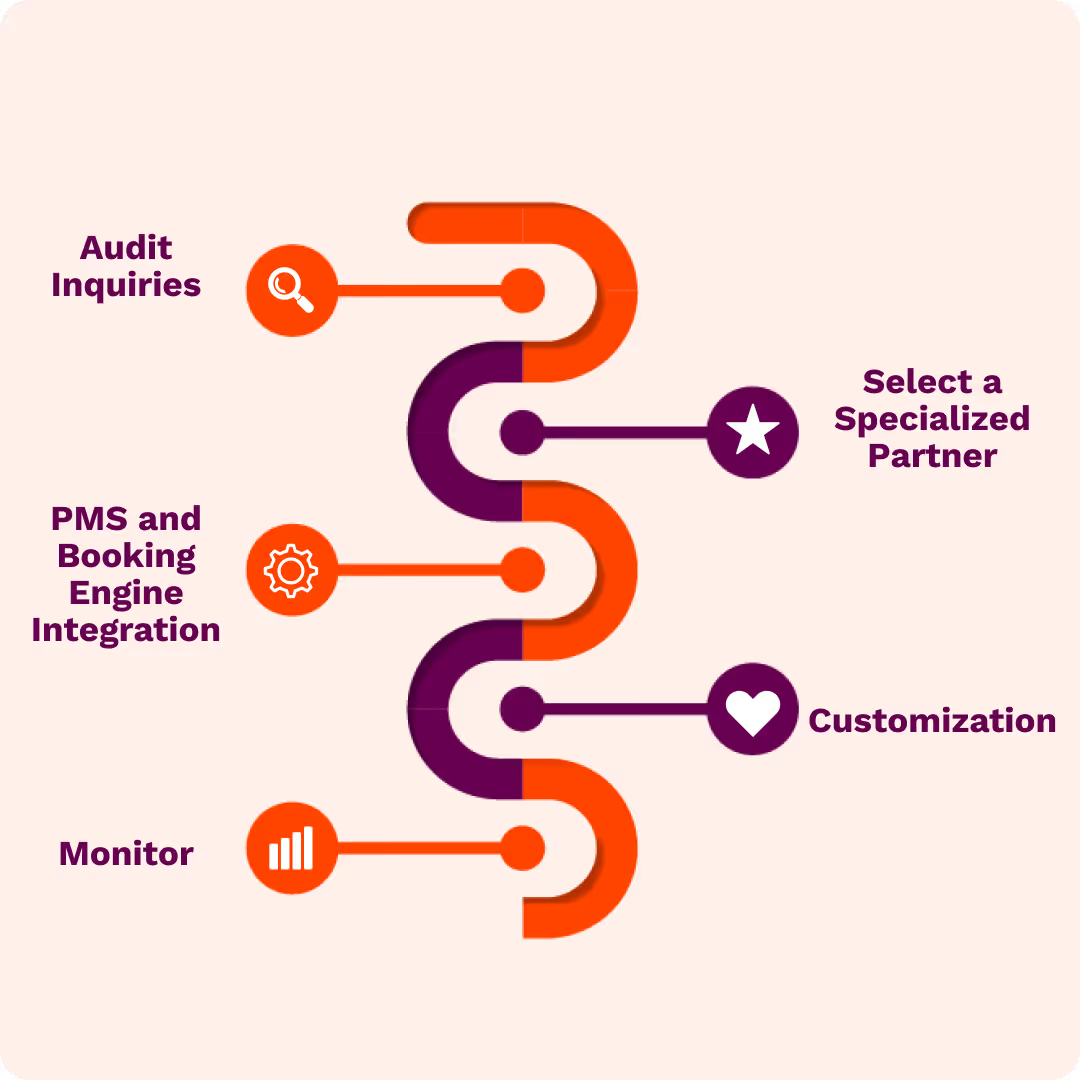
Many hoteliers hesitate to add new technology because they fear a long, complicated setup. However, a simplified approach makes the transition smooth:
- Audit Inquiries: Look at your last month of emails and front desk calls. Identify the top ten questions that eat up your staff’s time.
- Select a Specialized Partner: Avoid generic chatbots. A hospitality-specific bot understands terms like revpar, stay dates, and folio and integrates with your specific industry software.
- PMS and Booking Engine Integration: The bot must be able to see real-time availability and rates to be effective.
- Customization: Ensure the bot tone reflects the personality of your property.
- Monitor: Review the chat logs weekly to see where guests are dropping off and refine the answers.
Where Most Chatbot Implementations Go Wrong
The most common mistake is treating a chatbot as a set-it-and-forget-it tool. If the bot is not integrated with the booking system, it becomes just another hurdle for the guest. However, integration does not mean the bot itself processes the transaction. It is important to note that the inquiry and the transaction are separate stages: the chatbot guides the guest and answers their questions, but the final booking and payment are handled through your secure, PCI-compliant booking engine.
If the responses are too generic or fail to address the specific nuances of your property, it can actually hurt the guest experience. Finally, failing to track performance means you won't know your return on investment or where you are still losing direct bookings.
How Dharma Helps Mid-Sized Properties Get It Right
Dharma takes a different approach by treating the chatbot as an extension of your property’s collective intelligence. At the core of our solution is the Business Data Knowledge Base (BDKB). Instead of relying on generic templates, we build a comprehensive, structured repository of your property’s unique data.

This knowledge base allows the AI to respond with accuracy and brand-aligned personality. We provide a managed service where we handle the heavy lifting of gathering, structuring, and updating this data, ensuring your digital concierge is always as informed as your best front desk agent.
The structural power of Dharma comes from our deep integrations. A knowledge base is only effective if it can talk to the rest of your tech stack. Dharma bridges the gap between your Property Management System (PMS) and your guest’s smartphone. This means when a guest asks about a specific date or a special amenity, the response is pulled directly from live, updated, and accurate data. With Dharma, the goal is smarter operations, giving your team the freedom to focus on the guests in front of them while the digital concierge secures the guests of tomorrow.
In a market where guest expectations are shaped by the instant nature of the digital world, speed and consistency are the new benchmarks for service. For mid-sized properties, a chatbot is a fundamental requirement to remain competitive against both large brands and the dominant OTAs. By removing the wait time and providing a clear, direct path to booking, you are reclaiming your guest relationships and your margins.
If you are ready to see how an automated direct booking strategy can transform your property operations, let’s talk about the specific needs of your hotel.