


A hotel or vacation rental is not run once a month when the manager or property manager or owner reviews numbers. It runs every minute. One delayed room cleaning impacts an early check-in, one missed pickup trend affects next week’s pricing, and one unnoticed OTA shift slowly reduces profitability over time. The best hotel operators understand this deeply.
They do not wait for problems to appear in monthly reviews. They watch live operational signals, identify patterns early, and respond while the day is still unfolding. Hotels still relying on fragmented reporting systems lose hours per manager just manually gathering data instead of improving operations, recovering guests, or driving revenue.
This blog explains why reporting has become one of the most important operational tools in modern hospitality and how the right reporting system helps hotels respond early instead of reacting late.
What are Hotel Reports and its Need
Every hotel produces data. Occupancy numbers, housekeeping status, booking pace, channel performance, guest feedback. The problem is most hotels still use yesterday’s data to manage today’s operations. A GM walks into the morning briefing, sees RevPAR dropped 8%, and asks why. Hours later, someone realizes OTA bookings slowed six days ago, but nobody noticed early enough to adjust pricing or push direct bookings. That revenue is already lost.

The issue was not pricing alone. It was reporting latency. Industry benchmarks suggest that a strong dynamic pricing strategy can increase overall hotel revenue by 10-25% versus a static pricing model.
This is why reporting matters so much in hospitality. Strong reporting systems reduce the gap between information and action. At a single property, reporting feels useful. Across 20, 50, or 100 hotels, it becomes operational survival. Good reporting tools help hotel teams catch the patterns while operations are still unfolding, allowing them to respond early instead of reacting late.
Core Hotel Reports That Drive Decisions
Experienced hotel operators rarely look at a single metric in isolation. They track connected operational signals that help them understand demand shifts, operational pressure, guest behavior, and revenue movement before problems become visible.
Pickup and Pace Reports: Pickup and pace reports act as early demand indicators by showing how bookings are building compared to previous periods, forecasts, or market expectations. If pickup slows two weeks before arrival dates, revenue teams can immediately adjust pricing, launch campaigns, or optimize distribution strategies before occupancy weakens. Hotels that monitor booking pace closely respond faster to market changes instead of discovering lost demand after the opportunity has already passed.
Housekeeping and Room Status Reports: Housekeeping reports give live visibility into room readiness, cleaning status, maintenance blocks, and operational delays across the property. During high-occupancy periods, even small housekeeping delays can affect early check-ins, front desk efficiency, and guest satisfaction scores. This helps operations teams prioritize tasks faster and reduce bottlenecks before they impact the guest experience.

Revenue and Financial Reports: Revenue reports provide daily visibility into reservations, payments, ADR, occupancy, pickup trends, pending balances, and sales audits. These reports help operators monitor cash flow, track financial accuracy, and understand how pricing strategies are affecting hotel performance in real time. Dynamic pricing becomes far more effective when revenue teams can connect operational demand signals directly with financial performance and inventory movement.
Channel Performance Reports: Channel performance reports help hotels understand which booking sources generate the healthiest business, not just the highest occupancy. A proper report compares ADR, commission costs, cancellation rates, booking volume, guest segments, and net revenue across each channel. This visibility helps operators reduce dependency on low-margin channels, identify profitable booking sources, and avoid situations where high cancellation rates quietly damage inventory availability and overall profitability.
Labor and Operational Efficiency Reports: Labor reports connect occupancy forecasts with staffing and operational planning across departments. Hotels without forecasting visibility often struggle with overstaffing during slow periods or understaffing during peak demand. Operational reporting helps managers align housekeeping schedules, front office staffing, banquet preparation, and procurement decisions with expected business levels.
Guest Experience and Satisfaction Reports: Guest experience reports help hotels identify operational patterns hidden inside guest feedback and service data. These reports reveal which room types receive the most complaints, which shifts affect review scores, which guest segments generate the highest value, and where repeat guest retention may be declining.
Other reports like front desk, rate and inventory, forecasting and budget, F&B reports, marketing, competitive analysis reports, HR/payroll and sustainability reports – all help in long-term planning and taking the right operational actions.
What AI-Assisted Reporting Actually Changes
AI in hotel reporting becomes valuable when it helps teams identify patterns faster than manual analysis ever could. Modern AI-assisted systems can forecast demand shifts, detect unusual operational trends, monitor pricing changes, analyze guest behavior, and surface performance anomalies before they become visible problems.
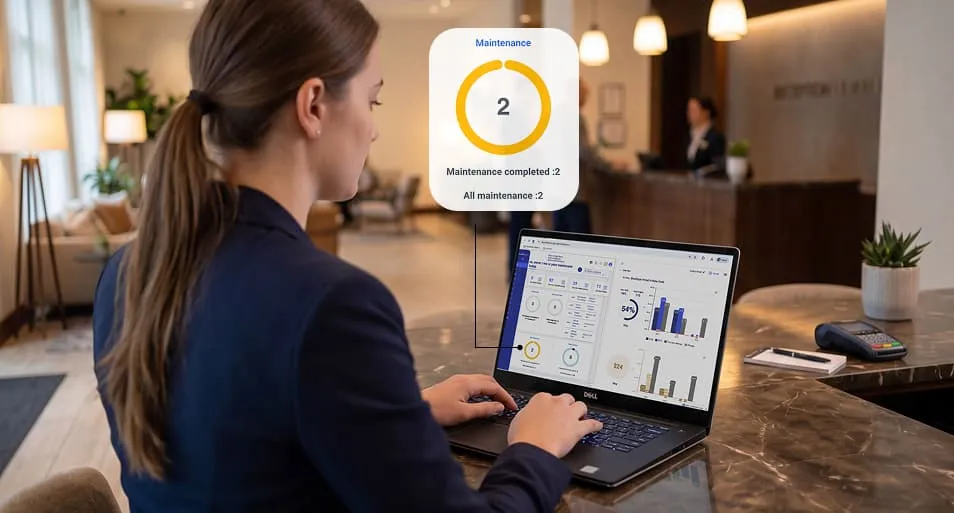
Instead of relying only on static dashboards, hotels can receive automated alerts when occupancy, ADR, RevPAR, pickup pace, labor costs, cancellation rates, or no-show patterns move outside expected ranges. This allows teams to respond earlier, optimize pricing faster, and make operational decisions with greater confidence while the business is still moving in real time.
How Dharma Approaches Reporting Today
While at Dharma, we are still evolving reporting capabilities, our direction is always operationally focused: helping hospitality teams stay informed without relying on disconnected spreadsheets, manual coordination, or delayed updates across departments.
Today, Dharma OPS + PMS provides visibility into issue tracking, work order execution, reservations, payments, ADR/OCR trends, pickup pace, booking curves, sales audits, and operational dashboards designed to help teams monitor performance and act faster in day to day hospitality management.
The Right Expectation to Set
Good reporting does not replace operational judgment. It improves the speed and accuracy of decision-making across the property. In hospitality, teams make thousands of operational decisions every day involving pricing, staffing, room assignments, maintenance, and guest service. The right reporting system helps managers understand what is happening quickly enough to respond with confidence instead of reacting after problems escalate.
Hotels should evaluate reporting systems not by how impressive the dashboard looks during a demo, but by how effectively the team can operate daily and specially on peak pressure days.