


Hotels spend between 322 and 470 hours every year switching between systems, according to recent research from Access Hospitality. That is nearly 40 to 60 full working days lost, not serving guests, not improving operations, not driving revenue, just moving between tabs, dashboards, spreadsheets, WhatsApp groups, and disconnected software.
From the lobby, hospitality operations look smooth. Behind the scenes, hospitality teams are manually stitching together information across PMS platforms, housekeeping apps, finance systems and guest messaging tools, just to keep the property moving.
The industry successfully improved operational visibility. In the process, it also created operational fragmentation. In this blog, we’ll explore these operational realities and the hidden challenges such systems quietly create behind the scenes.
What Does the “Spaghetti Stack” Look Like?
Modern hospitality tech is often described as a “spaghetti stack” where the tech ecosystem becomes a tangle of legacy systems, specialized software, and bolt-on tools.
Today, mid-sized properties usually operate across 15–20 different systems: a legacy PMS, alongside a separate POS, OTA channel manager, CRM, revenue management platform, accounting software, housekeeping tools, guest messaging, and more.
This complexity was never intentional. It happened gradually over time. Each new tool solved a specific operational problem, but very few solved coordination across the entire operation. According to industry research, 27% of hospitality businesses spend more than 11 hours every week reconciling information across systems. This shows how multiple systems often increase operational overhead instead of improving efficiency.
The core issue is not the existence of multiple systems, but the manual work required between them:
- Staff manually copy information between disconnected platforms
- Front desk teams rely on calls or messaging apps for housekeeping updates
- Managers cross-check reservations across PMS and OTA dashboards manually
- Finance teams reconcile conflicting reports from separate systems
Operations continue to function, but only through constant manual coordination and operational effort.
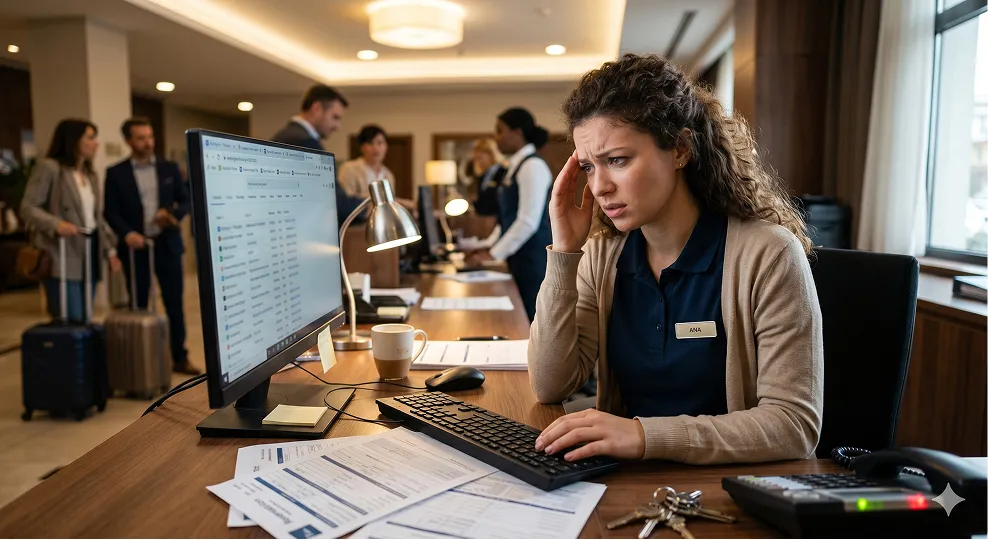
A Typical Day: Navigating Scattered Systems
Imagine a busy morning: It's 8:45am. You've got five checkouts pending, two early check-in requests from guests who messaged on WhatsApp (not your PMS, obviously), housekeeping hasn't updated room statuses yet, and your front desk agent is toggling between four tabs to piece together what's actually happening.
The housekeeping supervisor calls not through your system, on their personal phone to confirm two rooms are ready. The front desk manually updates the PMS. Meanwhile, a guest request that came through the in-app messaging tool gets missed because nobody was watching that tab. An hour later, the guest complains at the desk.
Nothing catastrophic happened, just many manual errors. Nobody made a terrible mistake. But ten small friction points compounded over eight hours. That's what fragmented systems do. They drain your staff’s energy slowly.
Hybrid Hospitality Multiplies This Inefficiency
Over the last five years, hospitality evolved beyond traditional hotels. Brands like Accor, CitizenM, Zoku, Hoxton, and Ascott expanded into hybrid hospitality models combining hotel rooms plus serviced apartments, co-living floors, co-working spaces, or a mix of STR units.
If you're running any kind of hybrid setup the fragmentation multiplies. You're now dealing with different rate structures, different operational workflows, different guest expectations, and different regulatory requirements all running through the same broken stack.
The operational team running hybrid properties are small. And they're manually reconciling occupancy, maintenance tickets, and billing across systems that were never built for this kind of hybrid model. This leads to staff exhaustion, reporting errors, and a GM who never fully trusts the dashboard numbers.
The Invisible Cost: Employee Retention
Licensing costs and IT overhead of scattered tools are visible. But what doesn't show up is the mental load your team is carrying, and what it's doing to retention. Constant system-switching, manual workarounds, repeating the same update creates a specific kind of fatigue that doesn't just hurt performance today. It drives good people out.
The report by Access Hospitality reveals that 60% of businesses find their data incomplete or unreliable, and 50% struggle to trace data origins. This lack of data confidence forces staff to manually double-check information, adding to the stress.
In an industry already struggling with staff turnover, losing a trained front desk manager because your tech stack made their job feel impossible is an expensive problem with an invisible root cause. Your management reports don’t track this but it's real and it's costing you.
From More Tools to Unified Hospitality Operations
The conversation in hospitality technology is changing. Operators are no longer asking only about features. They are asking whether it reduces coordination work, improves visibility, and helps teams move faster together.
For modern hotels, serviced apartments, and hybrid hospitality setups, unified operations are becoming essential. Front desk, housekeeping, finance, maintenance, and guest communication teams all need shared operational context instead of disconnected updates spread across multiple systems.
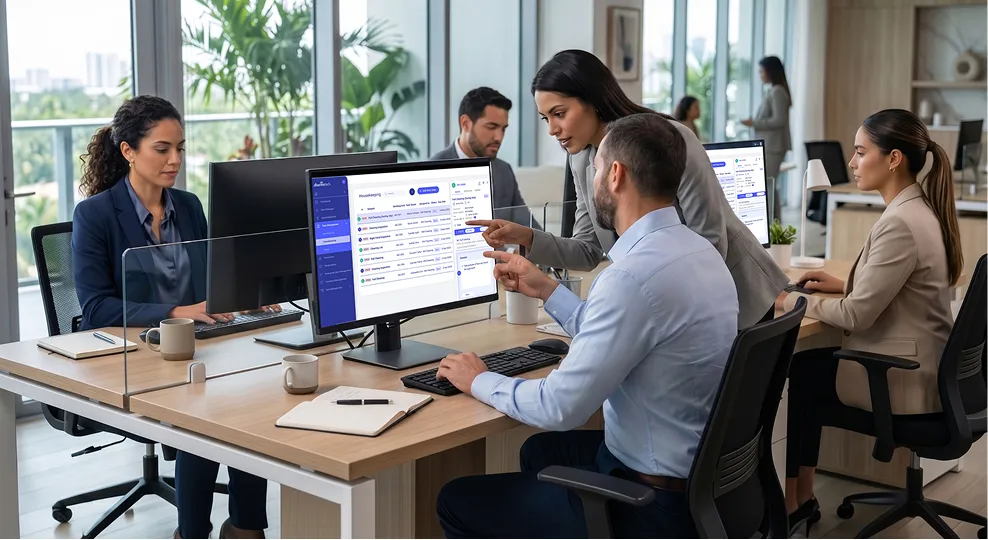
The good news? You don’t necessarily need to replace your entire tech stack. The shift usually starts by solving the biggest coordination gaps first, connecting the systems teams already use daily, and reducing unnecessary operational handoffs. And if you are planning on using AI for pricing, forecasting, guest communication, reporting, and operational planning, you also need to rethink what kind of technology your property actually needs and how those systems connect across your wider tech stack.
The biggest improvements today are coming from connected workflows and shared data, not from adding more disconnected tools. Hospitality will always be operationally demanding, but your systems should reduce manual work, improve coordination between teams, and help your staff make faster decisions with less friction.