
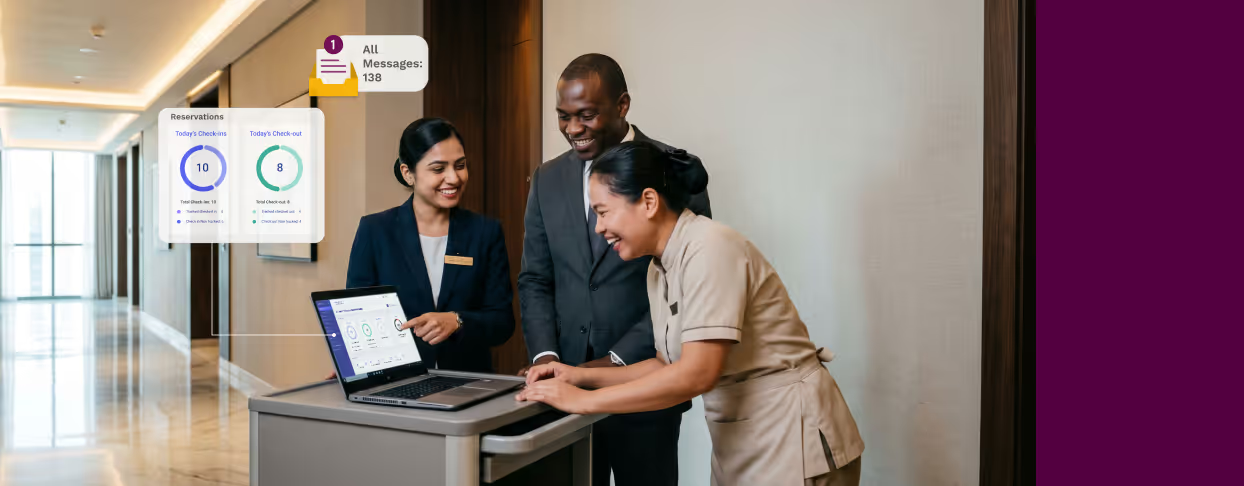
Walk into any well-run hotel and everything feels effortless. But nothing about hotel operations is effortless. Behind that calm experience is a system of people working across departments, shifts, and timelines. We rarely see this side. What is often forgotten is that the people delivering this service are human. In hospitality, they are often called heroes. And for good reason.
The scale of this effort is only growing. The World Travel & Tourism Council (WTTC) predicts that by 2034, the sector will employ 449 million people worldwide, representing 12.2% of the global workforce. As the industry expands, so does the pressure on the people running it every day. Which is why it becomes important to build systems that make their work easier, not harder.
This blog looks at what really happens behind the scenes and why even strong teams struggle to keep up. It also explores how the right systems can support teams, making your hotel heroes into superheroes.
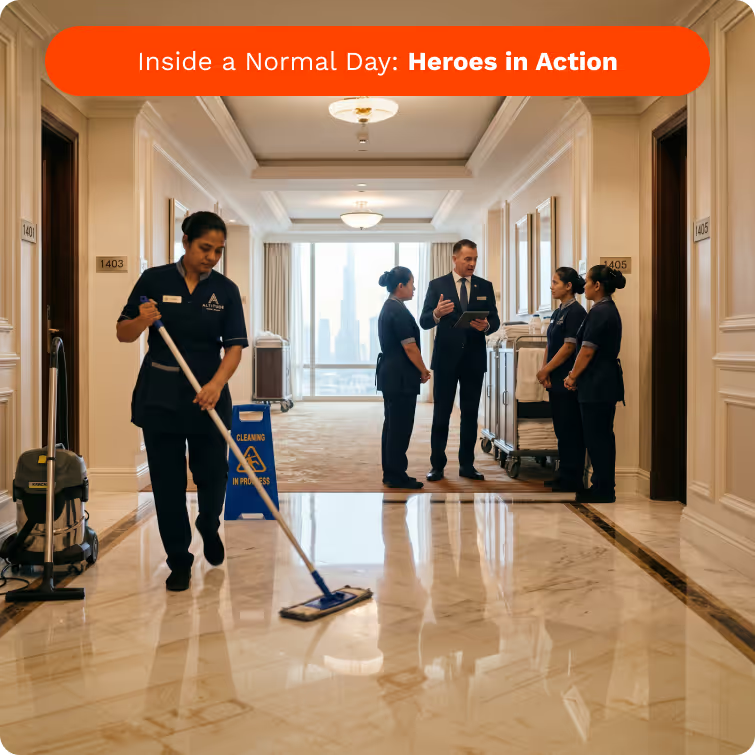
Inside a Normal Day: Heroes in Action
In hospitality no two days are the same and a regular hotel day does not start and end. It moves continuously, with different teams stepping in at different moments to keep things running.
Housekeeping starts early. Rooms need to be cleaned, inspected, and prepared on tight timelines, especially when there are back-to-back check-outs and arrivals. Every delay impacts the next guest experience.
At the front desk, the day builds quickly. Morning shift takeovers, check-outs, new arrivals, special requests, and last-minute changes all come together. At any given moment, staff are balancing guest expectations with what is actually possible operationally.
Maintenance, kitchen, IT, events, finance, marketing teams constantly work in the background, making sure the hotel is running 24x7. Not just that, during peak periods, many employees work 12 to 14 hours a day.
As you can see, across the day, communication and coordination never stops. Teams are adapting, prioritizing, and making decisions in real time to keep everything moving. We call this “controlled chaos”, managed by heroes who keep the wheels turning.
Why Even the Best Teams Feel Like They’re Always Catching Up
Even experienced and well-trained teams struggle. Not because they lack effort, but because the system around them is not designed for how they work. Most operators still rely on fragmented tools and disconnected workflows. Information is scattered across systems and people. Teams depend on calls, messages, and memory to coordinate. Simple coordination turns into repeated follow-ups.
This manual gap-filling comes at a high price: staff burnout, operational friction, and missed details. Even the best team gets exhausted when they have to heroically compensate for the incapability of the system
There is always that moment, whether during peak periods or when things go sideways, where everything feels chaotic. It’s like starting from zero, no one has full clarity and everyone is out of place, no matter how experienced the team is. This is when teams need something that keeps working for them even when they are tired. Because they are human, and they do get exhausted.
The Turning Point: When Systems Start Supporting the Heroes
The shift happens when technology solves real operational gaps, not when it adds another layer. It starts with visibility.
When a reservation is made, it reflects across teams. Housekeeping knows when rooms need to be prepared. When room status is updated in real time, the front desk can act immediately on check-ins without calling or waiting. This alone removes delays during peak hours.
With the right operations software, maintenance becomes structured. Issues are logged, assigned, and tracked, so nothing is missed and response times improve. Managers no longer chase updates. Live dashboards show what is pending, what is delayed, and where support is needed.
These are small changes in setup, but they reduce constant coordination. Just with automated guest communication, 60, 70, 80% of the staff's time is saved to focus on more complicated tasks or just being available for friendly, personal service requests as per Oracle’s 2025 report.
And the industry is recognizing that. According to HotelTechReport, 21% of hoteliers say their most important technology goal is transforming business processes and operating models. This comes before revenue, customer experience, and cost reduction.
Making your heroes, super heroes with Dharma OPS
From working closely with operators, one thing is clear. Teams do not need more tools. They need systems that reduce coordination. Dharma OPS is built around this idea. It does not replace your PMS. It works with your existing setup and strengthens operations where the gaps exist. Here’s how:
Unified Messaging: It starts with communication. A unified guest inbox brings messages from WhatsApp, email, OTAs, and other channels into one place. Teams respond faster with full context, without switching between platforms.
Task Management: A dashboard that brings structure to daily operations. Across teams, tasks are assigned, tracked, and completed with visibility and accountability, so nothing gets missed. With SOP Templates, teams can define standard workflows like multi-step room cleaning or inspections, and automate their scheduling based on triggers such as check-outs, upcoming arrivals, or priority rules. This creates a consistent, efficient workflow without relying on manual coordination, ensuring the right tasks happen at the right time, every time.
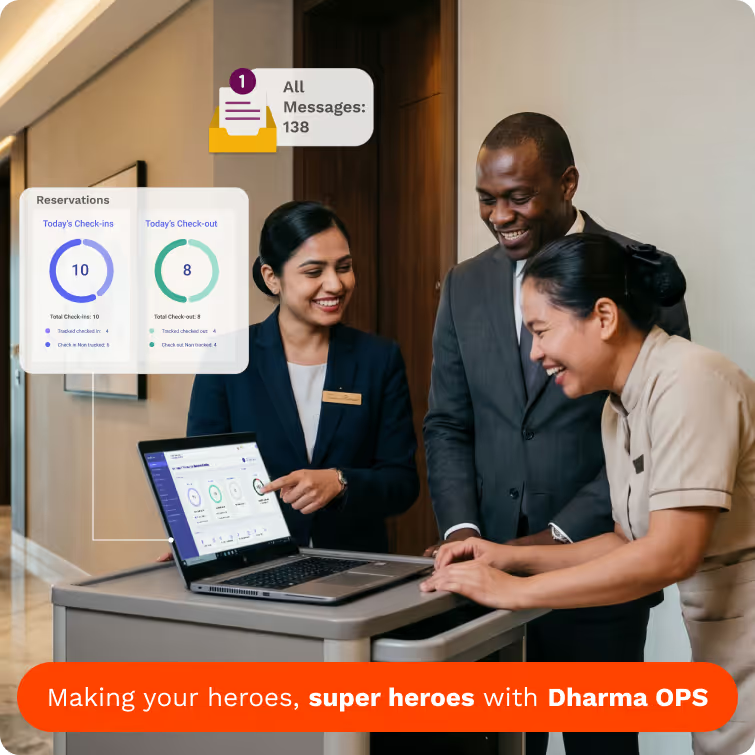
Centralized Database: The Business Data Knowledge Base acts as a single source of truth. All property information is stored in one place, making it easy for teams and AI assistants to access accurate details instantly.
Personalization: Guest profiles help teams understand preferences and personalise interactions without relying on memory.
Unit Management: For multi-property operators, everything is visible in one system, with reporting and dashboards that show what is happening across locations.
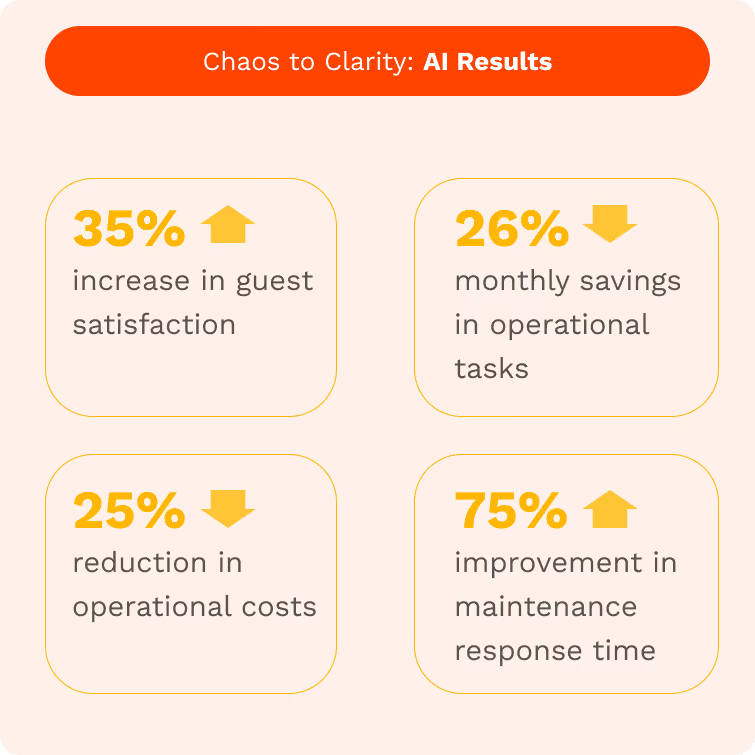
Above this, AI assistants handle repetitive queries, support staff, and reduce workload. This is how teams move from managing chaos to operating with clarity. We have observed up to 35% increase in guest satisfaction, 26% monthly savings in operational tasks, 25% reduction in operational costs, and 75% improvement in maintenance response time.
This is how teams move from controlled chaos to operating with clarity – no chaos at all!
Conclusion: Redefining What Makes a Great Operations Team
“Motivate them (hotel staff), train them, care about them, and make winners out of them…they’ll treat the customers right. And if customers are treated right, they’ll come back,” stated J. Willard Marriott, founder of the Marriott Corporation.
This is how hospitality has always worked. People first–both guests and staff.
But today, effort alone is not enough. The complexity and guest expectations have increased. When the right systems are in place, teams just work better. So yes, the right software can make your heroes superheroes.
But it also raises a question. Is the real hero the team, or the technology that supports them? Or is it the combination of both that truly defines great hospitality? What do you think?