

.jpg)
Managing a scattered-site portfolio comes with challenges that don't exist when everything happens under one roof.
When properties are spread across different neighborhoods, or even different cities, maintenance teams, housekeepers, inspectors, vendors, and coordinators all need to stay aligned without being in the same place. The work itself isn't necessarily more complicated. Keeping everyone informed is.
A repair gets completed, but the work order isn't updated. A housekeeper reports an issue in a group chat instead of creating a ticket. Someone calls a technician because they aren't sure whether the repair has already been verified.
Individually, those moments don't seem like much. Together, they slow down turnovers, create duplicate work, and make it difficult to know exactly where every task stands.
Most operators don't need more people to solve these problems. They need a workflow that makes it easier for everyone to work from the same information.
Why Scattered-Site Property Management Creates Operational Blind Spots
The more properties you manage, the more people become part of every task. A maintenance request may begin with housekeeping, move to a technician, be reviewed by a supervisor, and finally be closed by a coordinator. Those handoffs are a normal part of running a scattered-site operation.
Problems usually begin when each person is working from different information.
When Information Lives in Different Places
Imagine a leaking sink reported after a guest checks out. The technician fixes it before lunch, the supervisor confirms the repair later that afternoon, but someone else is still trying to determine whether the work is complete because the latest update was shared somewhere other than the work order. The repair took thirty minutes. Keeping everyone informed took just as long.
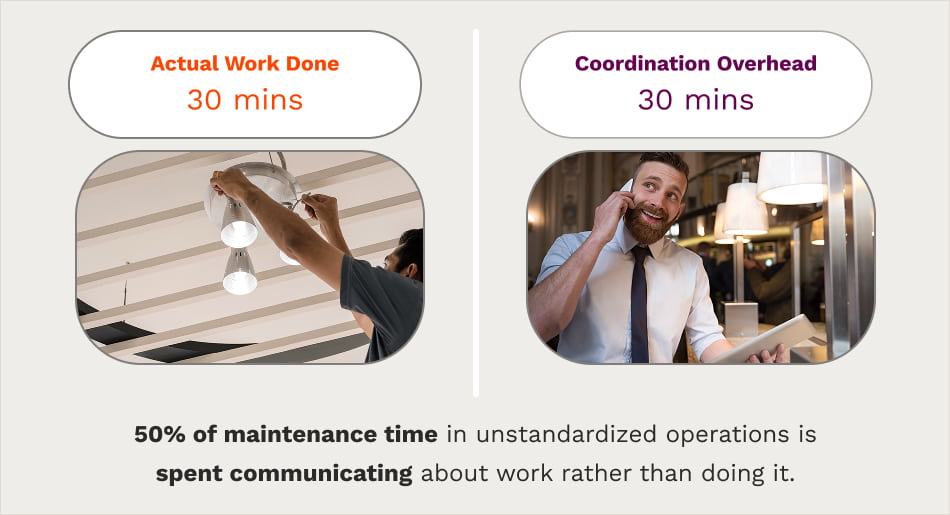
We saw a similar pattern during an internal review of one of our maintenance workflows. Nearly half of the documented steps involved repeating or transferring updates between different communication channels instead of moving the repair itself forward. The review helped us identify where unnecessary work could be eliminated.
Small Delays Become Bigger Problems
Each interruption may only cost a few minutes, but across dozens of properties, they quickly add up.
Maintenance requests stay open after work is finished, supervisors spend time asking for updates instead of reviewing completed jobs, and teams wait on confirmations before preparing a unit for the next guest. These situations often point to workflow issues rather than people working harder or less.
Building Multi-Property Task Tracking Through Standardized Workflows
When a task gets delayed, it's easy to assume someone forgot about it. More often, two people simply have different expectations about who's responsible for the next step.
Clear ownership removes that uncertainty. From the moment a work order is created, everyone involved should know who's handling the task, what still needs to happen, and when it's expected to be completed.
One Workflow Doesn't Mean One Way of Working
No two properties operate the same way. Different buildings have different vendors, staffing models, and service levels. That flexibility doesn't have to disappear. What should stay consistent is the process for assigning work, documenting progress, and closing tasks.
For example, one property may rely on memory for move-out inspections while another follows a checklist with photos and maintenance notes. Over time, those differences make it harder to compare performance or identify recurring issues across the portfolio.
Standardized workflows create consistency where it matters while still allowing each property to operate according to its needs.
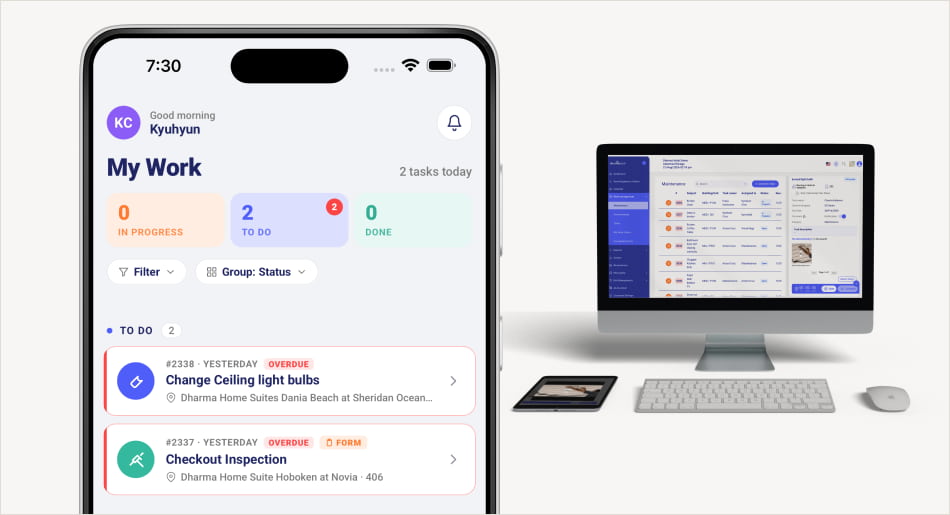
One of the simplest ways to reduce unnecessary follow-ups is to make the work order the place where every update happens.
If someone wants to know whether a repair is complete, they shouldn't have to search through messages or ask multiple people. The task itself should show who was assigned, what was done, when it happened, and whether anything is still pending.
The fewer places teams need to check, the easier it becomes to keep work moving.
How Better Workflows Reduce Unnecessary Handoffs
Most maintenance issues aren't especially difficult to resolve. What takes time is everything that happens around them.
People ask whether the technician has arrived, confirm the repair is finished, or request photos before closing the work order. Good workflows don't eliminate communication. They reduce the need to repeat it.
Let the Workflow Handle the Routine
The more routine tasks the workflow can handle, the less time teams spend coordinating them manually. Work orders can be assigned automatically, status changes can notify the next person in the process, and photos, comments, and completion notes stay attached to the task instead of being shared across different channels.
These features don't replace the people doing the work. They simply remove small interruptions that slow it down.
When updates stay attached to the task instead of being shared across different channels, teams spend less time chasing information and more time moving work forward.
Better Visibility Without More Check-Ins
When updates stay connected to the task, managers spend less time asking for information and more time reviewing it.
Instead of calling a technician for a status update, they can see which work orders are still in progress. Instead of waiting until the end of the week to identify recurring issues, they can spot patterns as they develop.
That visibility doesn't come from collecting more information. It comes from keeping the information together.
Scaling Operations with the Right Support and the Right Systems
Adding more units doesn't just increase maintenance requests or turnovers. It also increases the number of people involved in keeping operations moving.
At some point, many operators realize that hiring more people isn't the only way to support growth. Sometimes the bigger opportunity is improving how work moves from one person to the next.
.jpg)
When Operational Support Makes Sense
Every operator builds their business differently. Some keep operations in-house, while others outsource specific responsibilities so their internal teams can focus on owners, guests, and business growth.
Many of the operators we work with reach that point as their portfolios grow. Rather than continuing to expand their internal teams, they rely on Dharma to coordinate day-to-day operational workflows while their own teams stay focused on the parts of the business that require their direct attention.
We support vacation rental, corporate housing, and hospitality operators with maintenance coordination, housekeeping workflows, guest support, reservation management, and other operational services. Our teams are backed by the Operations Platform, PMS, and Channel Manager, giving everyone access to the same tasks, property information, and operational updates.
Support the Team, Not Just the Process
Technology works best when it supports people rather than asking people to adapt to it.
A platform can organize tasks, automate notifications, and keep work visible, while experienced teams coordinate vendors, respond to unexpected situations, and keep daily operations moving.
Often, improving operations doesn't require rebuilding the entire process. It starts by removing the everyday interruptions that slow teams down, such as duplicate updates, unclear ownership, and information scattered across multiple places.
—-
Managing scattered-site properties will probably never feel as simple as managing a single building. There will always be more people involved, more handoffs, and more moving parts. The difference is whether those moving parts work together.
When tasks have clear ownership, updates stay with the work order, and everyone follows the same workflow; teams spend less time looking for information and more time getting work done.
If your portfolio has reached the point where coordination is taking up as much time as the work itself, it may be time to look at the workflow behind the operation.
At Dharma, we help hospitality operators manage day-to-day operations with experienced teams supported by our technology, making it easier to keep properties running smoothly as portfolios grow.