

Effective management of hotel operations hinges on the ability to standardize procedures, train staff efficiently, and ensure every interaction meets established service benchmarks. Hotels face increasing pressure to ensure standard operating procedures (SOPs) are consistently followed, and staff are adequately trained to deliver seamless guest experiences.
Dharma’s all-in-one Operations Platform addresses these challenges by centralizing hotel operations, simplifying task management, and enhancing staff training through AI-assisted workflows. By integrating knowledge management in the hospitality industry, hotel SOP software, hotel knowledge base, hospitality learning systems, digital SOP management, and AI assistants, Dharma empowers housekeeping and operational management teams to execute tasks accurately, streamline onboarding, and maintain SOP consistency in real time.
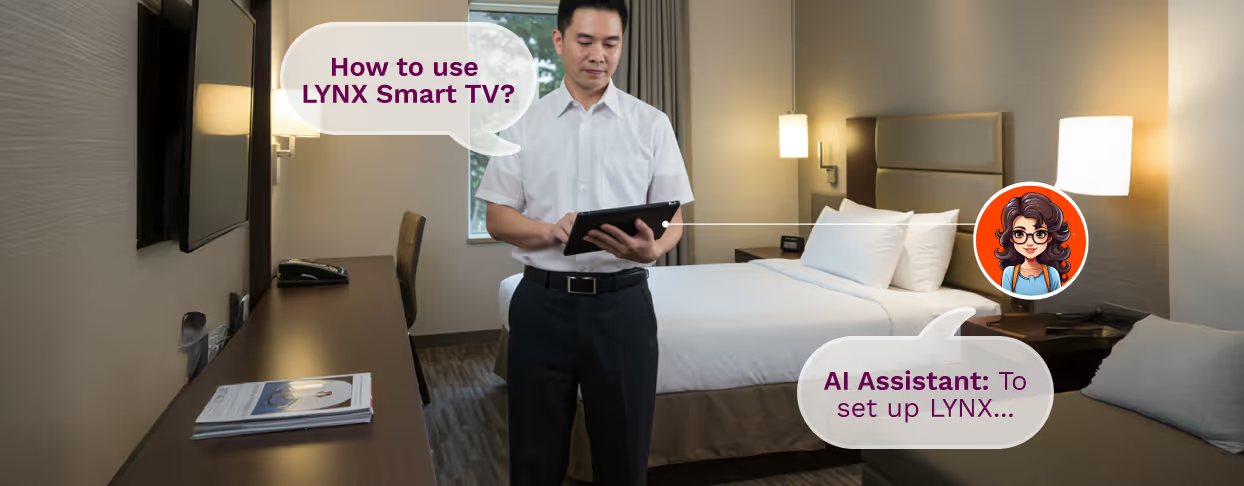
The AI Assistant for Staff within Dharma OPS acts as both a real-time operational guide and an on-demand training companion. It provides step-by-step SOP instructions, answers procedural questions instantly, and recommends best practices - ensuring every staff member performs tasks accurately, consistently, and with minimal supervision. This dual role of assisting and reinforcing training enables hotels to maintain service excellence even with high staff turnover.
With Dharma, housekeeping managers can assign tasks, track progress, and ensure compliance with operational standards, while maintenance teams receive instant guidance on resolving issues. The platform’s AI Assistant for Staff provides step-by-step instructions for procedures, reducing errors and improving operational efficiency from day one.
Operational Challenges in Housekeeping and Hotel Management
Housekeeping and property operations are central to a hotel’s ability to deliver consistent service quality. Any lapses such as delayed room turnovers, incomplete maintenance tasks, or procedural errors directly affect guest satisfaction and brand reputation. Hotels traditionally face several operational challenges:
- Complexity of SOPs: Hotel procedures are often documented across multiple platforms, including paper manuals, spreadsheets, and legacy systems.
- High employee turnover: Frequent staff transitions necessitate continuous training, creating pressure on management to maintain service consistency.
- Inefficient interdepartmental coordination: Housekeeping, maintenance, and front desk departments often operate in silos.
- Limited access to real-time information: Staff may not have immediate access to updated procedural information or guest-specific requirements.
These challenges highlight the importance of a digital SOP management system and a centralized hotel knowledge base, which facilitate real-time access to operational procedures, enabling staff to execute tasks accurately and efficiently.
How Dharma Supports Smarter Housekeeping & Operations
Dharma’s OPS Platform is built to streamline hotel housekeeping and operational management by combining AI-driven guidance, centralized task management, and real-time analytics. The platform addresses the core challenges of SOP adherence, accountability, and operational efficiency, ensuring that staff can execute tasks accurately and consistently.
Key Features and USPs of Dharma OPS:
AI Assistant for Staff
Provides instant, on-demand access to SOPs, operational guidelines, and maintenance protocols. Staff receive step-by-step instructions, reducing errors and minimizing the need to consult multiple sources. The assistant also reinforces training through contextual recommendations, helping new hires perform with confidence from day one.
Work Management with Accountability
Every work order whether for housekeeping, maintenance, or general tasks - has a designated task owner (individual or group), ensuring full accountability and preventing tasks from being overlooked.
Split-Screen and Inline Editing
Staff can view work orders in a side-by-side panel and edit fields without leaving the overview. This enables real-time updates on maintenance issues, housekeeping status, or guest requests while keeping overall operations visible and organized.
References & Smart Assignment
Work orders can be linked to the correct unit, reservation, or related tasks. Assignments can be directed to individuals or teams, with the ability to add followers for visibility. This ensures tasks are completed efficiently and that relevant team members stay informed.
Simple, Transparent Status Flow
Tasks progress through clear stages - from “Open” to “Closed” - with flexibility for routine tasks to be completed autonomously or complex tasks requiring managerial approval. This maintains a balance of team autonomy and oversight, improving operational control without creating bottlenecks.
Digital SOP Management
Ensures housekeeping and operational teams are always aligned with the latest procedures. SOPs are updated in real time, minimizing inconsistencies and ensuring compliance.
Actionable Analytics
Management can monitor operational KPIs, resource utilization, and staff performance to drive continuous improvement. Data-driven insights highlight bottlenecks, retraining opportunities, and workflow optimizations.
Impact statistics from hotels using Dharma:
- 30% increase in operational efficiency
- 25% improvement in guest satisfaction scores
- 20% reduction in operational costs
- 78% faster maintenance response time
Importance of Knowledge Management for Housekeeping and Staff Training
A structured hospitality learning system integrated with an AI training assistant ensures that employees are informed, competent, and confident in executing their responsibilities. Effective knowledge management in hospitality industry practices allows hotels to capture both explicit procedural knowledge and tacit operational expertise, ensuring continuity and consistency across all staff levels.
Key operational benefits include:
- Accelerated onboarding: New staff members can access SOPs, training videos, and operational guidelines instantly, reducing time-to-competence by approximately 40%.
- Consistent service delivery: Uniform adherence to housekeeping and operational procedures ensures that guest experiences remain standardized across shifts and locations.
- Reduction in operational errors: Immediate access to validated procedures minimizes deviations from established SOPs.
- Enhanced operational efficiency: Integration with PMS, maintenance management, and guest services streamlines workflows and reduces redundancies.
By implementing a knowledge management framework, hotels ensure that housekeeping teams and operational managers can execute tasks with precision, reducing errors and improving overall operational performance.
Core Components of an Effective Hotel Knowledge System
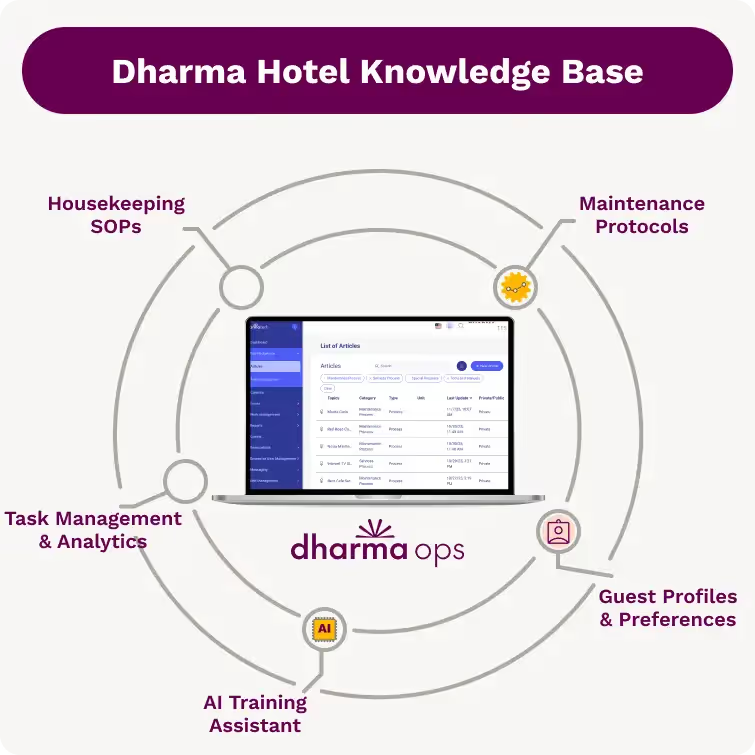
A comprehensive hotel knowledge management system integrates multiple functionalities to support seamless operations:
- Centralized hotel knowledge base: Consolidates SOPs, housekeeping schedules, maintenance procedures, and guest data in a single repository.
- Hotel SOP software with digital SOP management: Automates updates to procedures and protocols, ensuring all staff access the most current information.
- Hospitality learning system: Provides role-specific learning modules, microlearning content, and competency assessments to streamline staff training.
- AI training assistant: Offers real-time guidance, answers procedural queries, and recommends best practices to optimize performance.
- Analytics and reporting: Tracks task completion, identifies knowledge gaps, and monitors operational efficiency metrics.
System integration: Ensures seamless connectivity with PMS, CRM, and other operational platforms to eliminate information silos.
Implementation and Practical Benefits
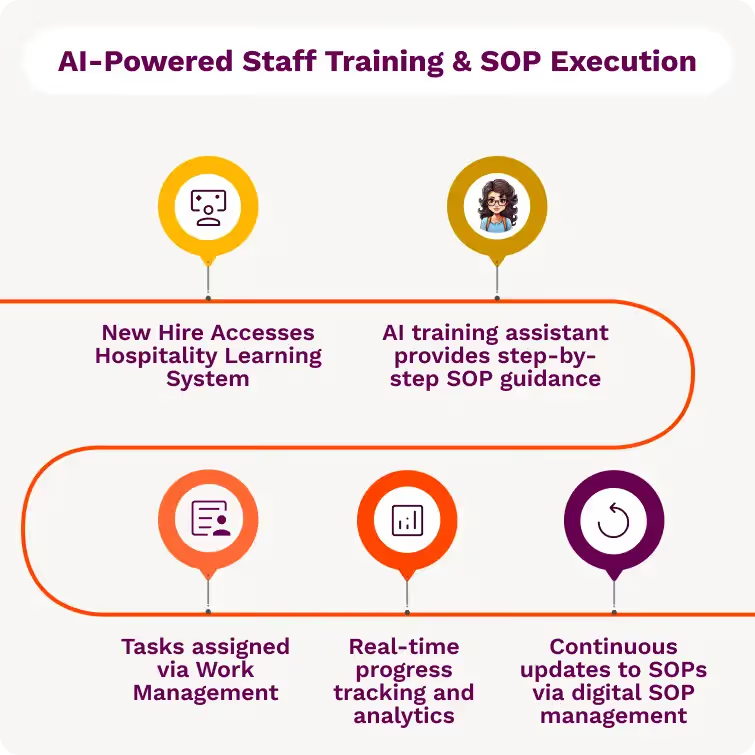
Hotels leveraging knowledge management systems report significant improvements in housekeeping and operational efficiency. Key strategies include:
- Streamlined onboarding and training
- New staff access comprehensive hospitality learning systems to self-pace their training, covering housekeeping protocols, maintenance procedures, and service standards.
- AI training assistants provide step-by-step guidance, reducing dependency on senior staff for routine instructions.
- Real-time SOP updates
- Changes to room cleaning standards, maintenance procedures, or guest service protocols are automatically disseminated to staff devices.
- Ensures uniform compliance and reduces managerial oversight required for SOP enforcement.
- Task management and accountability
- Smart assignment, inline editing, and reference linking enhance clarity and accountability for each task.
- Data-driven insights and performance optimization
- Managers can monitor completion rates, operational delays, and staff performance.
- Identifies areas requiring retraining or process refinement, ensuring continuous improvement in service delivery.
Conclusion: Transforming Hotel Operations Through Knowledge Management
Adopting advanced knowledge management in hospitality industry systems ensures hotels can maintain operational excellence, streamline SOPs, and consistently deliver superior guest experiences.
By implementing hotel SOP software, a centralized hotel knowledge base, digital SOP management, and AI-powered training tools, hotels can ensure operational efficiency, consistent SOP adherence, and improved guest satisfaction.
Dharma’s all-in-one Operations Platform provides the tools and insights needed to simplify housekeeping and property management, making operations seamless, accurate, and measurable. Staff are empowered, managers are informed, and guests experience unparalleled service quality.
Book a Free Consultation with Dharma today to elevate your hotel operations, streamline SOPs, and implement smarter staff training.