
Hospitality has undergone a fundamental transformation that goes far beyond simple tech upgrades. For decades, the gold standard of service was defined by face-to-face interaction and the presence of a physical front desk. However, today’s landscape looks entirely different. We are seeing a permanent shift where speed, convenience, and autonomy are the primary benchmarks of a high-quality stay.
Modern travelers no longer view digital check-ins or keyless entry as futuristic perks; they expect them as the baseline. This change is a response to a world where people manage their entire lives from a smartphone. When a guest can order a meal, book a flight, and manage their bank account without speaking to anyone, waiting in a lobby line feels like an outdated chore. To remain competitive, operators must view contactless service as a core operational strategy rather than a flashy add-on.
What a True Contactless Guest Journey Looks Like

A truly contactless journey is end-to-end. It is not enough to simply offer a digital key if the guest still has to stand in line to verify their ID or sign a paper registration form. If even one step requires a manual, physical intervention, the entire digital flow breaks, and the guest experiences friction.
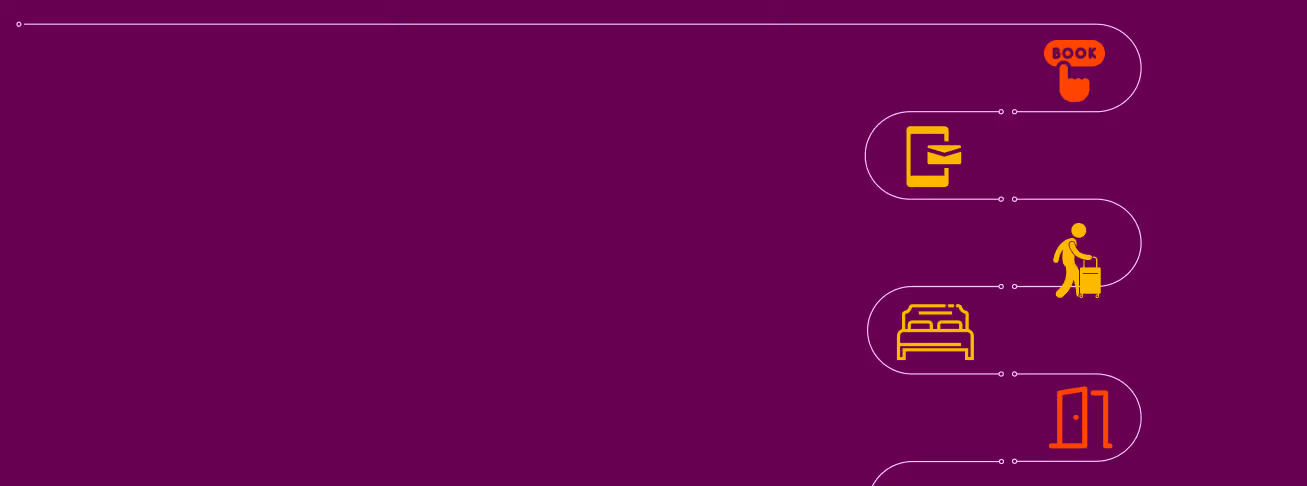
The goal is to create a closed-loop system where every touchpoint connects to the next. The journey begins the moment a reservation is made and continues long after the guest has left the property. By automating the five core stages (booking, pre-arrival, arrival, in-stay, and check-out), operators can provide a level of consistency that manual processes simply cannot match. According to current data from Skift Research, approximately 80% of travelers now prefer fully automated front desks to traditional check-in lines.
Stage 1: Frictionless Booking and Property Management System Integration
The journey begins at the point of sale. A mobile-first booking design is essential, as most modern reservations happen on handheld devices. Integration is the most important factor here: your Property Management System (PMS) must communicate perfectly with your channel manager and payment processor. This prevents overbookings and ensures payment is secured automatically before the guest even packs their bags.
From the guest’s perspective, a mobile-optimized booking that provides an instant confirmation and clear next steps is critical because it sets a tone of digital reliability, giving them the immediate confidence that their stay is secured without needing to call or wait for a manual follow-up.
Stage 2: Pre-Arrival Automation and Digital Guest Verification
The days leading up to an arrival are the time to build trust. Instead of leaving guests wondering about access, automated pre-arrival messaging provides clarity. These communications should include essential instructions, FAQs, and opportunities for upsells. This stage eliminates front desk dependency by collecting ID verification and payments days before the guest arrives.
Stage 3: Contactless Check-In That Actually Works

The arrival experience is the moment of truth. A successful model allows guests to go straight to their room via smart locks and digital keys. Industry reports from Hospitality Net indicate that hotels implementing these flows see front-desk wait times drop by over 60%. Real-time support via centralized messaging replaces the need for a physical concierge.
Stage 4: The In-Stay Experience—Automation Without Losing Service
Once inside, a guest’s need for service doesn't disappear; it just changes form. Automation in-stay should focus on enhancing hospitality. Centralizing all communication into one platform ensures requests don't get lost. Automated responses can handle 80% of common inquiries, like Wi-Fi passwords, allowing your team to focus on complex, high-touch guest needs.
Research from PhocusWire suggests that 68% of hospitality companies now expect automation to be the primary driver of improved guest experiences.
Stage 5: Seamless Check-out and Post-Stay Engagement
A contactless check-out should be as simple as the guest clicking a button on their phone or simply walking out the door.
Post-stay engagement is where you turn a one-time guest into a loyal advocate. Automated review requests should be sent shortly after departure, while the experience is still fresh. Because you have captured data throughout the journey, you can also send personalized follow-up offers that reflect the guest's actual behavior, making them much more likely to book with you again.
Integrated Technology That Powers It All
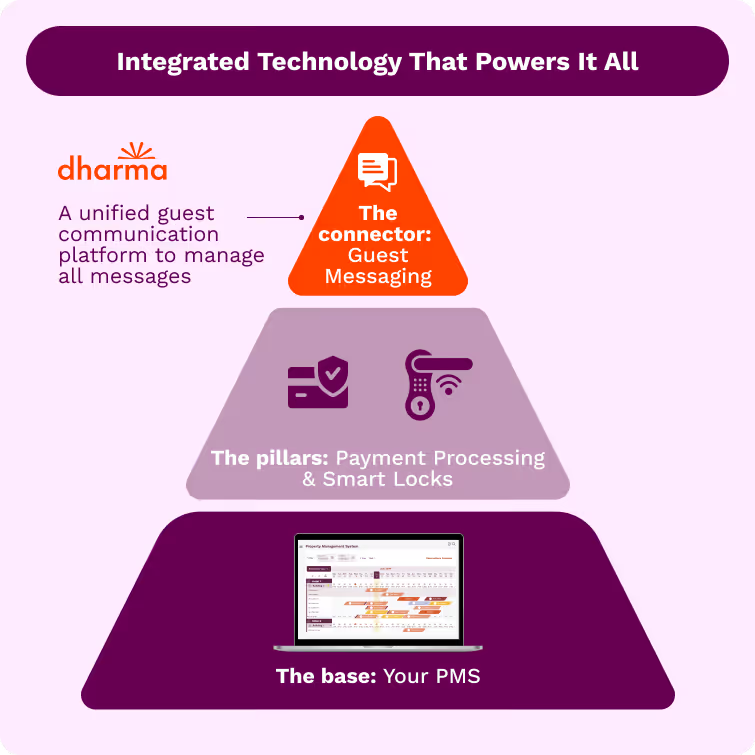
Contactless technology only works when the various systems talk to each other. A fragmented tech stack is the biggest threat to a good guest experience. If your smart locks don't know when your PMS has checked a guest in, the guest will be left standing outside a locked door.
The core stack essentials include:
- A robust PMS to act as the single source of truth.
- A unified guest communication platform to manage all messages.
- Smart lock and access control hardware that integrates with your booking data.
- Secure payment processing that handles transactions automatically.
When these systems are connected, errors decrease, and the staff's workload is significantly reduced.
Operational Consistency: Where Most Properties Fall Short
Technology is only half the battle. The other half is the operational discipline required to maintain the system. Properties often fail when they treat contactless as a “set it and forget it” tool. Workflows must be standardized across the entire team.
Even in a contactless model, staff play a vital role. They need to be trained to monitor the digital systems and step in immediately if a gap is identified. This might mean housekeeping updating room status in real-time so the automated check-in can trigger faster. Success comes from making contactless service a core part of the company culture rather than just a software implementation.
How Dharma Supports a Seamless, Contactless Journey
Achieving this level of automation requires the right partner to bridge the gaps between systems. Dharma’s Operations Platform (OPS) provides the infrastructure needed to turn these five stages into a single, fluid operation. By centralizing communication tools, Dharma ensures that guests never feel ignored despite the lack of physical staff at every corner.
Our automation workflows are designed to sit on top of your existing guest journey, handling the heavy lifting of scheduling messages and triggering access codes. Because Dharma OPS integrates directly with common property management systems, it acts as the enabler that keeps the entire 5-stage loop closed and secure.
We also recognize that the future of guest management relies on real-time awareness, which is why the features in our platform are built to support broader broadcast messaging to keep all stakeholders informed instantly as the stay progresses.
The move toward a contactless model is no longer an optional upgrade. It is a necessary evolution for any property operator who wants to scale. By removing the friction of manual processes, you allow the stay itself to become the highlight.
Stop managing silos and start delivering experiences. Book a call with our team to see how we can streamline your operations and elevate your guest satisfaction.